
The National Port Strategy Explained : Challenges, Objectives, and Implementation

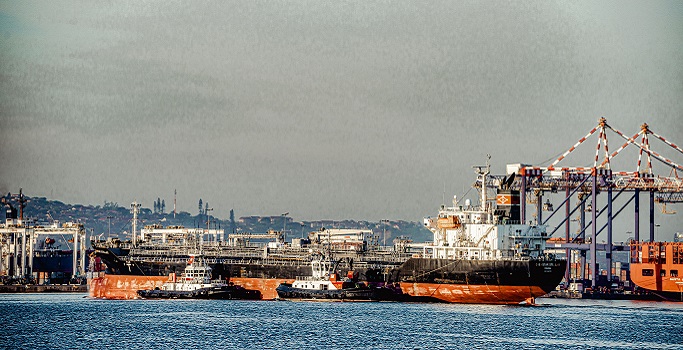
In Africa, where many coastal countries are seeing a proliferation of port projects—sometimes just a few dozen kilometers apart—the concept of a National Port Strategy (NPS) takes on its full meaning.
At a time when states are seeking to maximize the economic impact of their ports while attracting major investments, the establishment of a National Port Strategy (NPS) has become essential. It helps avoid internal competition, promotes complementarity between national ports, and encourages them to operate in perfect synergy across specialized segments in order to stimulate and strengthen the development of the national port sector.
On the international stage, countries such as France, Australia, and Germany have already adopted their own National Port Strategies. In Africa, however, very few countries currently have such a strategy in place.
But what exactly is a National Port Strategy (NPS)?
What does a National Port Strategy (NPS) actually entail?
What are the objectives of a National Port Strategy (NPS)?
And most importantly, how is such a strategy designed and implemented?

A National Port Strategy (NPS) is a common framework that defines the vision, ambitions, strategic objectives, priorities, etc., for the development of a country’s national ports. It is a long-term strategic plan that considers the country’s entire port system and aims to optimize the economic, environmental, and social performance of the ports, with a focus on competitiveness, efficiency, and sustainability.
As a political tool for ports, the National Port Strategy takes the form of a document that must be shared with all public and private stakeholders and partners in the port and maritime sector.
Countries with multiple ports—whether operational, under construction, or in the planning stage, and whether maritime, lake, or river ports dedicated to trade, transit, fishing, or leisure—must have a well-established national port strategy, adopted by all stakeholders in the sector.
The National Port Strategy must be adaptable, meaning it should be designed to respond to future economic, digital, and geopolitical changes. As much as possible, it should be framed over the long term and may be defined over a 10-, 15-, or 20-year horizon.
In Africa, Morocco stands out as the only country that has already established a National Port Strategy, developed in 2010 by the Ministry of Equipment and Transport, with a projection toward 2030.
In Senegal, the General Directorate of the Autonomous Port of Dakar held a workshop from Monday, August 12 to Tuesday, August 13, 2024, in Saly, to consolidate Senegal’s National Port Strategy, ahead of the official release of the document.
Objectives of a National Port Strategy
The development of a National Port Strategy by a country can serve several objectives, notably the efficient, sustainable, and harmonious development of its ports; economic growth through increased market share; and social development (creation of direct and indirect jobs) in the national port sector, among others.
Development of a National Port Strategy
The development of the National Port Strategy must be the result of a collective effort. Port authorities, maritime and port stakeholders — both from the public and private sectors — as well as all relevant stakeholders (associations, unions, chambers of commerce, etc.) must each make an active contribution to the formulation of the National Port Strategy.
The development of the National Port Strategy must be led by the government or a government agency responsible for ports. Additionally, the process may benefit from the support of a strategic consulting firm specialized in the sector.
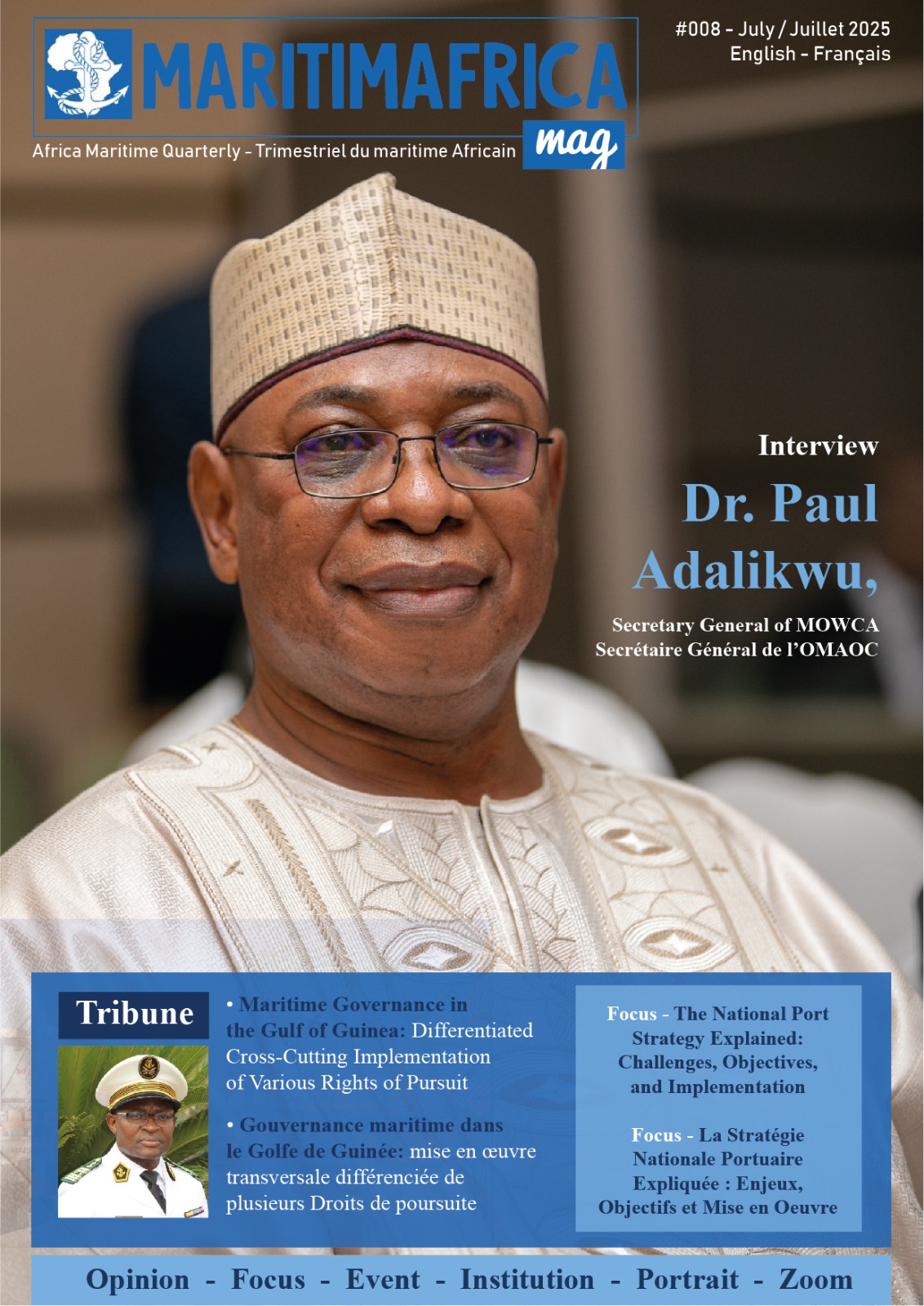 Read the rest of the article on page 42 of the 8th issue of Maritimafrica Mag : https://maritimafrica.com/en/wp-content/uploads/2025/07/Maritimafrica-Mag-juillet-2025-Eng-Fr.pdf