Scaling up Uganda’s Experience on Fish Export and Aquaculture for a Resilient and Competitive Blue Economy
Uganda’s steadily expanding fisheries and aquaculture sector is emerging as one of the most promising Blue Economy developments in the IGAD region. From 15–18 December 2025, an IGAD delegation led by Dr Eshete Dejen, Head of the Sustainable Environment Protection Unit at the IGAD Agriculture and Environment Division, undertook a technical mission across Entebbe and Kampala to document best practices, assess export systems, and strengthen collaboration with key actors driving the country’s fish value chain. The mission responds to Member States’ request to identify and scale successful Blue Economy models that can inform regional learning and policy action.
The engagement began with discussions at the Ministry of Agriculture, Animal Industry and Fisheries, where national authorities outlined progress in fisheries governance, export regulation and aquaculture development. With Uganda’s population projected to reach 100 million by 2050, the Ministry emphasised the critical role of aquaculture in meeting rising demand for affordable protein while reducing pressure on wild stocks. These exchanges underscored the importance of coordinated governance, reliable data systems, and sustained investment in improving sector performance.
On the second day, the delegation visited Lake Bounty Group, a major exporter of Nile Perch fillet to the European Union. The company shared insights on value addition, market requirements, and the economic contribution of high-standard fish processing. This was complemented by a visit to Chemiphar Laboratory, one of Uganda’s accredited testing facilities supporting compliance with international food safety regulations. Uganda’s strengthened quality assurance system—enhanced after earlier EU export bans—continues to safeguard access to key markets and contributes an estimated USD 100–150 million annually to the national economy.

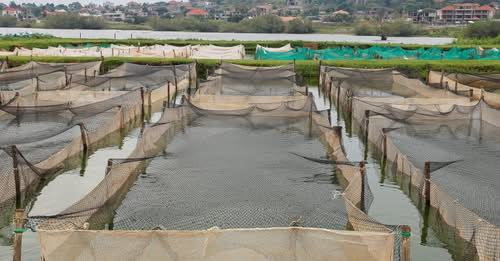
Field engagements on the third day captured the dynamism of Uganda’s aquaculture sector, particularly cage farming on Lake Victoria, which accounts for more than 99 percent of national aquaculture production. At the Kasenyi Fish Landing Site, the delegation observed inspection procedures that ensure export-bound Nile Perch meets international standards. Discussions with operators at Victoria Treasures Limited further highlighted the growing role of private-sector investment in tilapia production, fish processing and export, driving innovation and competitiveness across the value chain.
Through this mission, IGAD is documenting Uganda’s achievements, lessons and scalable community-driven technologies to strengthen regional knowledge on Blue Economy development. The findings will contribute to policy briefs, case studies and multimedia products designed to support Member States in advancing sustainable aquaculture, enhancing food safety systems, promoting private-sector participation and reinforcing resilient Blue Economy value chains.
By working closely with national institutions, research bodies and private operators, IGAD continues to promote inclusive, competitive and environmentally sustainable growth across the region’s Blue Economy.
Source : IGAD