Ghana Launches Three-Year Project to Strengthen Compliance with WTO Agreement on Fisheries Subsidies
In a major step toward protecting its marine resources and aligning with global trade standards, Ghana has officially launched a transformative three-year project aimed at strengthening compliance with the World Trade Organization (WTO) Agreement on Fisheries Subsidies.
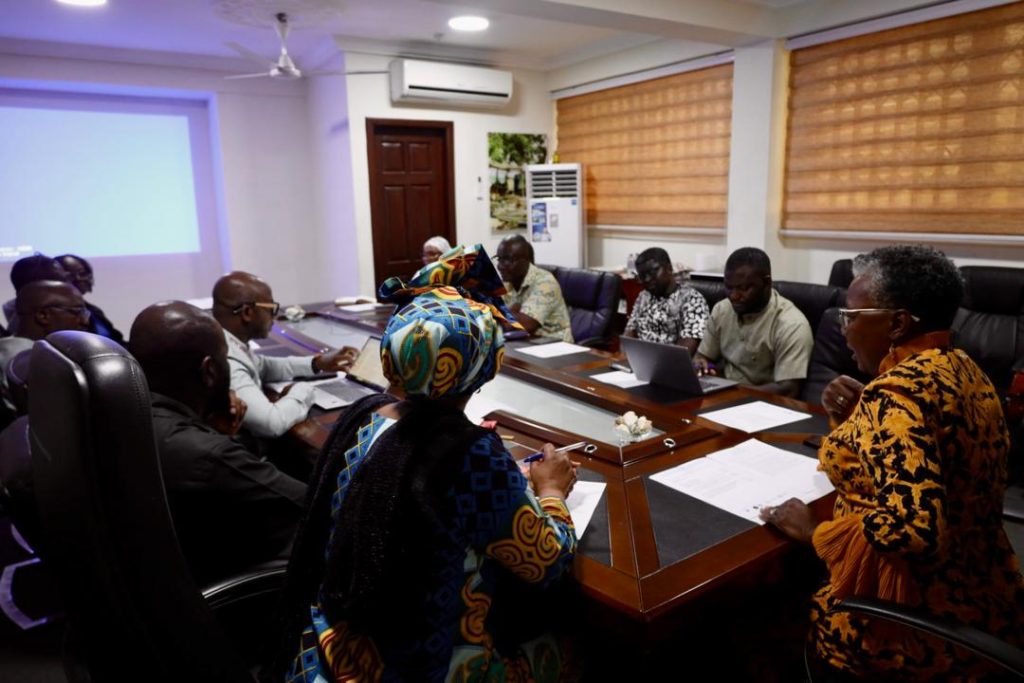
The initiative was unveiled at a high-level meeting in Accra convened by the Ministry of Fisheries and Aquaculture, with the Fisheries Commission in attendance. Funded by the WTO Fish Fund, the project is being implemented in partnership with the Global Fisheries and Resilience Action (GFRA).
The project marks a significant shift toward more transparent, accountable, and sustainable fisheries governance. It is designed to curb harmful subsidies that contribute to overfishing and fuel Illegal, Unreported, and Unregulated (IUU) fishing.

Speaking at the launch, the Minister for Fisheries and Aquaculture, Hon. Emelia Arthur, underscored the urgent need to build robust compliance systems. She emphasized that the project is critical not only for Ghana’s international obligations, but also for the long-term sustainability of the country’s fisheries sector and coastal economy.
“Effective compliance is not just about meeting international obligations,” Hon. Arthur stated. “It is about ensuring that our fisheries remain productive, equitable, and sustainable for generations to come.”
A Five-Pillar Framework for Reform
The three-year initiative is anchored on a comprehensive national implementation framework designed to balance economic growth with marine conservation. Progress will be monitored across five key pillars:
- Subsidies: Monitoring and tracking fiscal flows to ensure that public funds do not support capacity-enhancing or harmful fishing practices.
- Biological: Assessing and monitoring fish stock status to prevent overexploitation.
- Livelihoods: Safeguarding the household incomes of vulnerable coastal communities that depend on artisanal fishing.
- Distributional: Promoting equity across the fisheries value chain, with particular attention to gender inclusion and support for women in the sector.
- Governance: Strengthening institutional transparency, legal frameworks, and regulatory oversight.
Immediate Funding and Oversight
To ensure swift implementation, the first tranche of funding has already been disbursed to support the immediate operationalization of compliance mechanisms.
An 11-member steering committee has also been established to oversee the project’s execution. The committee will hold monthly coordination meetings, facilitate regular stakeholder engagements, and conduct rigorous quarterly reviews to ensure Ghana remains on track in meeting its WTO commitments.
Through this bold initiative, Ghana is positioning itself to protect its marine resources while securing the long-term livelihoods of coastal communities.
Source : Ministry of Fisheries and Aquaculture