Women in Maritime Day highlights gender equality progress and ongoing gaps
IMO celebrated the International Day for Women in Maritime in London (18 May), under the theme “From Policy to Practice: Advancing Gender Equality for Maritime Excellence”.
A special event at IMO headquarters brought together maritime experts and advocates to explore best practices in turning commitment into action in presentations and panel discussions.
Celebration and accountability
IMO Secretary-General Arsenio Dominguez opened the event by framing it as both a celebration of women, and a time to take accountability of persistent gaps in gender diversity.

“There are large steps we must still take to show that we are indeed serious when it comes to gender inclusivity and equity in the maritime sector,” he said.
He paid tribute to maritime workers worldwide, including those stranded in the Persian Gulf, while welcoming the the strong female presence in the audience: “When I look around this hall, I can see how many women are here. And I think that shows that we are breaking the stigma.”
Sobering reality
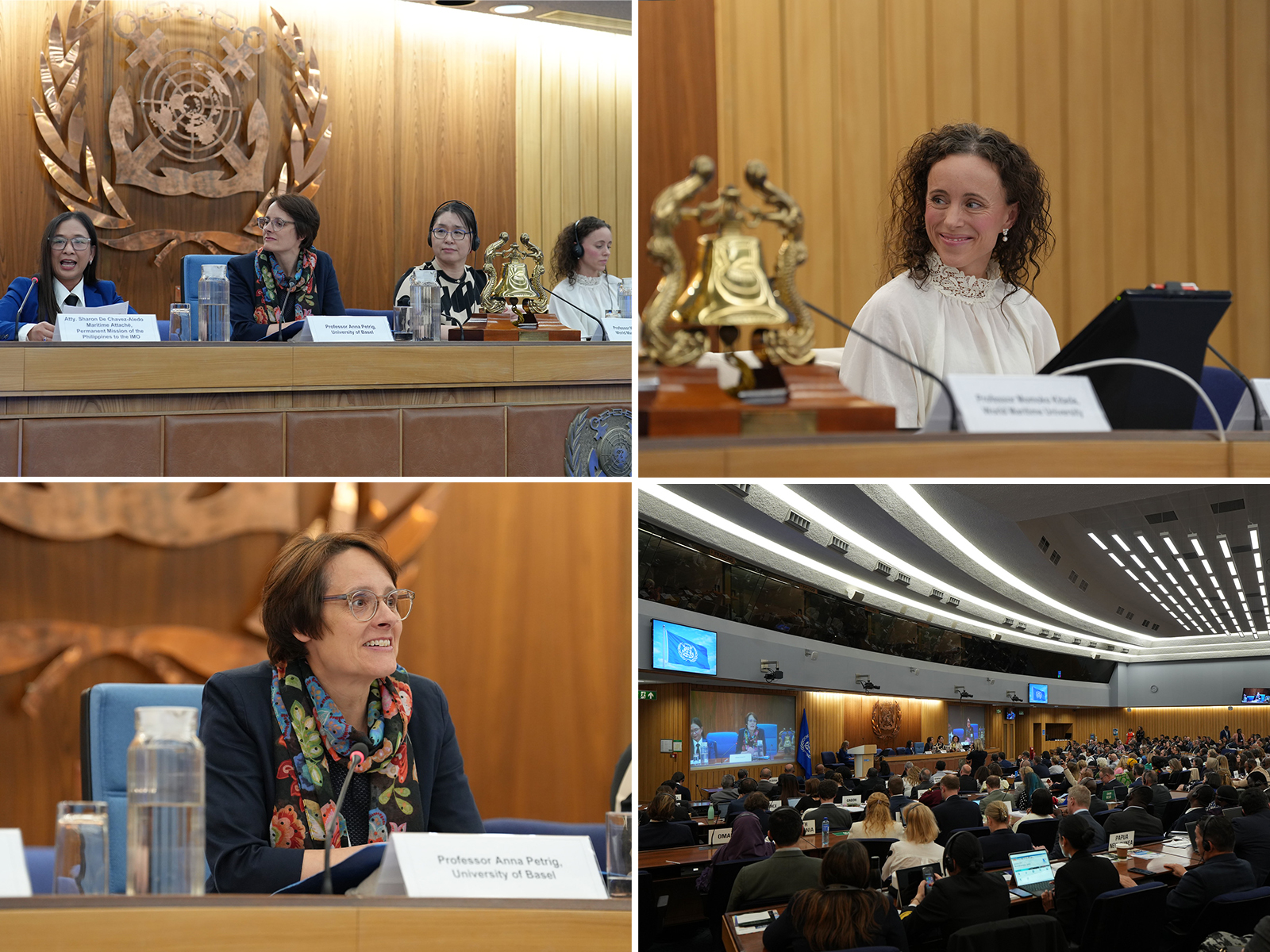
Speaking on the importance of gender mainstreaming in shipping, Professor Anna Petrig of the University of Basel highlighted “sobering” figures: women comprise a mere 1% of the global seafaring workforce.
Representation declines further in ships’ operational roles, and more women than men leave before reaching senior positions.
While acknowledging that “the headwinds are strong,” Professor Petrig stressed that gender mainstreaming is an essential tool for turning policy commitments into actual practice.
Industry taking the lead
Mia Krogslund Jørgensen, Vice President and Head of People, Culture and Strategy at the world’s largest tanker company, Hafnia, shared some solutions. The company raised female seafarer representation to 12% – well above the industry average, driven not by compliance but by a strategic decision “to expand the talent pool.”
“We didn’t do everything at once. We started small and kept on building, a lot of small things add up to progress”, Ms Jørgensen said.
Practical changes included introducing PPE designed to fit women and updating in board medical supplies to reflect women’s specific health needs.
A flagship initiative to operate several 50/50 gender-balanced ships, developed in partnership with the University of Southern Denmark, has identified best practices that are now “a new normal” at Hafnia.
Ms Jørgensen called for collective action across ship owners, regulators, training institutions and leaders: “This industry needs to evolve, and I can only encourage that we do that together”.
Gender Equality Award
During the event, Professor Momoko Kitada, Academic Dean and Head of Maritime Education and Training (MET) at the World Maritime University, received the 2026 IMO Gender Equality Award, endorsed by the IMO Council. (Read more)
The Japanese maritime academic and former seafarer Professor was presented by Secretary-General Arsenio Dominguez, in recognition of her outstanding contributions to advancing gender equality and the empowerment of women in the maritime sector.
New handbook on gender mainstreaming
The new Handbook on Gender Mainstreaming in the Maritime Sector was also launched during the event. (Read more)
Developed by Professor Kitada, the handbook is the first practical guide for gender mainstreaming in the maritime specific context. Professor Kitada emphasised that gender mainstreaming is “not a document on the shelf” but a living strategy that “benefits everyone”.
- Watch video highlights of the day
- Watch the livestream recording of the event
- Browse photos from the event
- More information on the event page
Source : IMO