Guinea: First Pilot Blue Carbon Mangrove Project Achieves Over 90% Technical Success
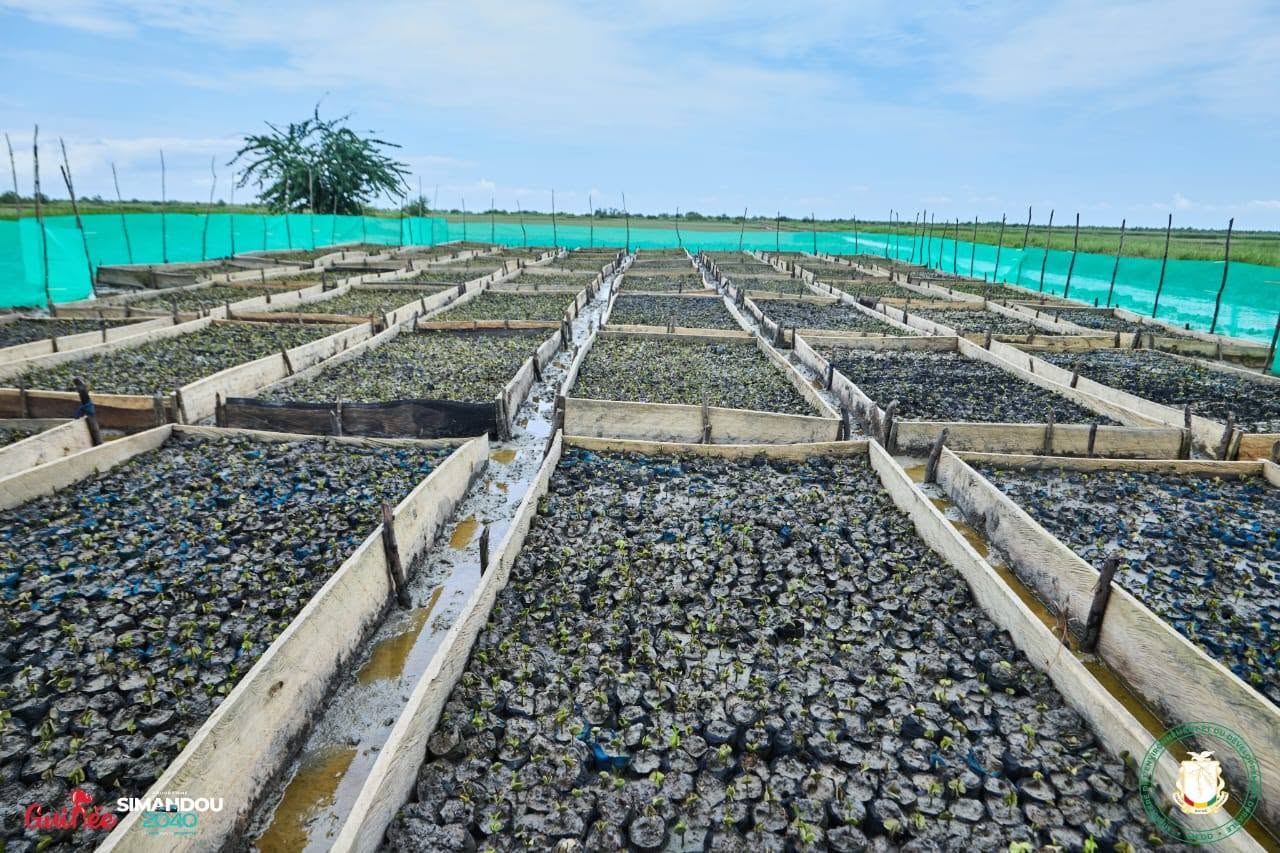
Guinea has reached a new milestone in the development of its blue economy with the implementation of its first pilot blue carbon project in a mangrove ecosystem. In Kakossa, Forécariah Prefecture, the Secretary General of the Ministry of Environment and Sustainable Development (MEDD), Dr. Karim Samoura, conducted an evaluation mission of the initiative, which is being implemented in partnership with WEST AFRICA BLUE.
Launched in the Amaraya district, the project has achieved a technical success rate exceeding 90% in the field, demonstrating the effectiveness of mangrove restoration efforts and their strong potential for carbon sequestration.
An ambitious mangrove restoration programme
The project aims to restore 7,000 hectares of mangroves to capture carbon dioxide and generate carbon credits certified under the internationally recognized Verra standard. The entire process is carried out under the regulatory oversight of the MEDD, ensuring environmental compliance and the credibility of future carbon credits.

Beyond its environmental impact, the initiative also represents a significant economic opportunity. According to the ministry, Guinea’s national mangrove restoration projects could mobilize between US$50 million and US$100 million. The revenues will be shared among the government, the project operator, and local communities, particularly through the financing of income-generating activities.
Communities at the heart of the economic model
Dr. Karim Samoura emphasized that several carbon credit projects have already secured commitments from a major buyer.
“In Guinea, at least five carbon credit projects have already secured the commitment of a leading purchaser, Rio Tinto. The company is supporting project operators in attracting top-tier private investors to ensure the overall financing of these operations,” he said.
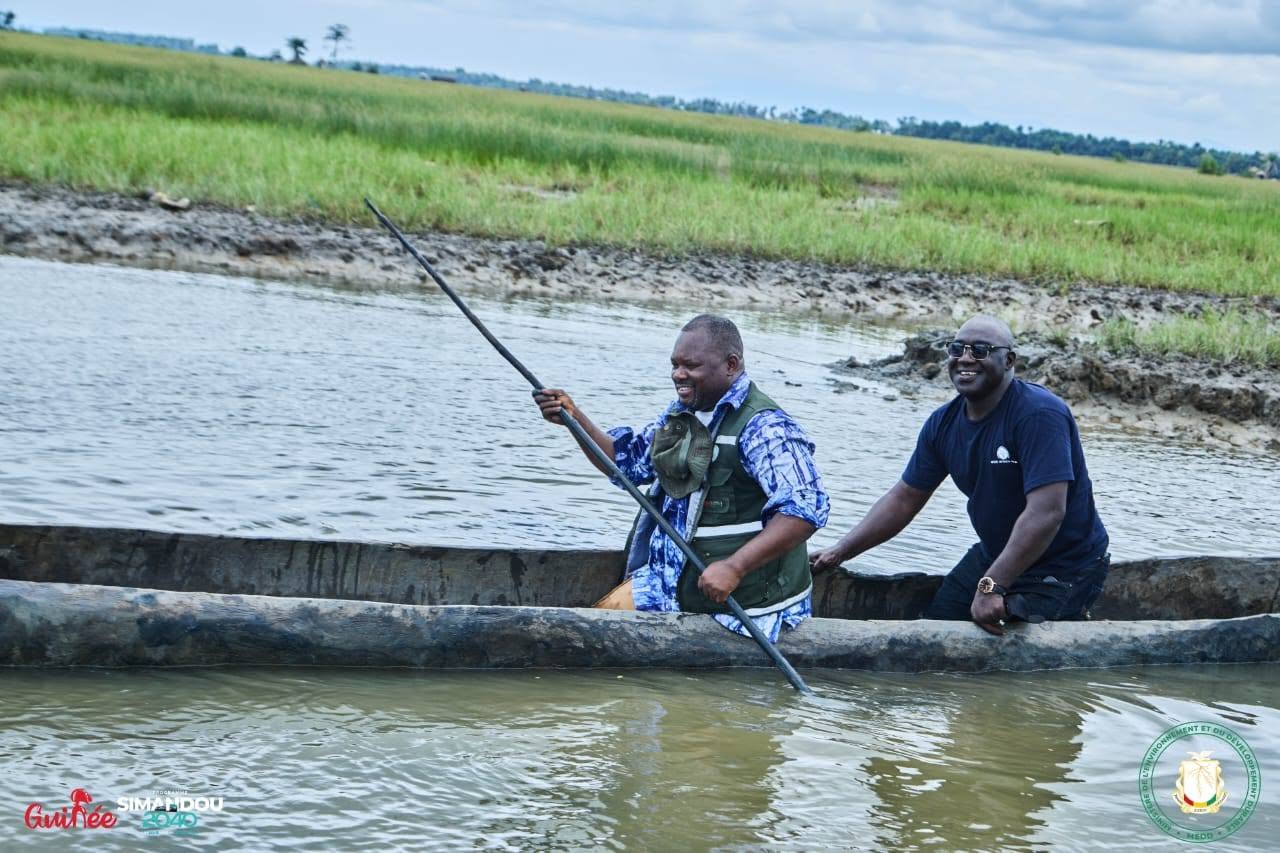
He also highlighted the project’s social dimension, which seeks to provide sustainable economic alternatives for coastal communities.
“These resources make it possible not only to organize reforestation activities, but also to finance income-generating initiatives for local residents, thereby reducing pressure on mangrove ecosystems and making communities genuine partners in the project,” the MEDD Secretary General added.
A practical illustration of the Simandou Vision
For the Guinean authorities, this pilot project goes beyond ecological restoration. It forms part of a national strategy designed to reconcile industrial development, ecosystem protection, and climate finance.
“This tangible success embodies the environmental pillar of the Simandou Vision championed by His Excellency Mamadi Doumbouya, combining industrial development with sustainability,” Dr. Karim Samoura concluded.
With this first pilot initiative, Guinea is positioning its mangrove ecosystems as a strategic pillar of the blue economy, capable of contributing to climate change mitigation while generating lasting economic and social benefits for coastal communities.