Mauritius – Marine Invasive Alien Species Awareness Corner inaugurated at RGSC
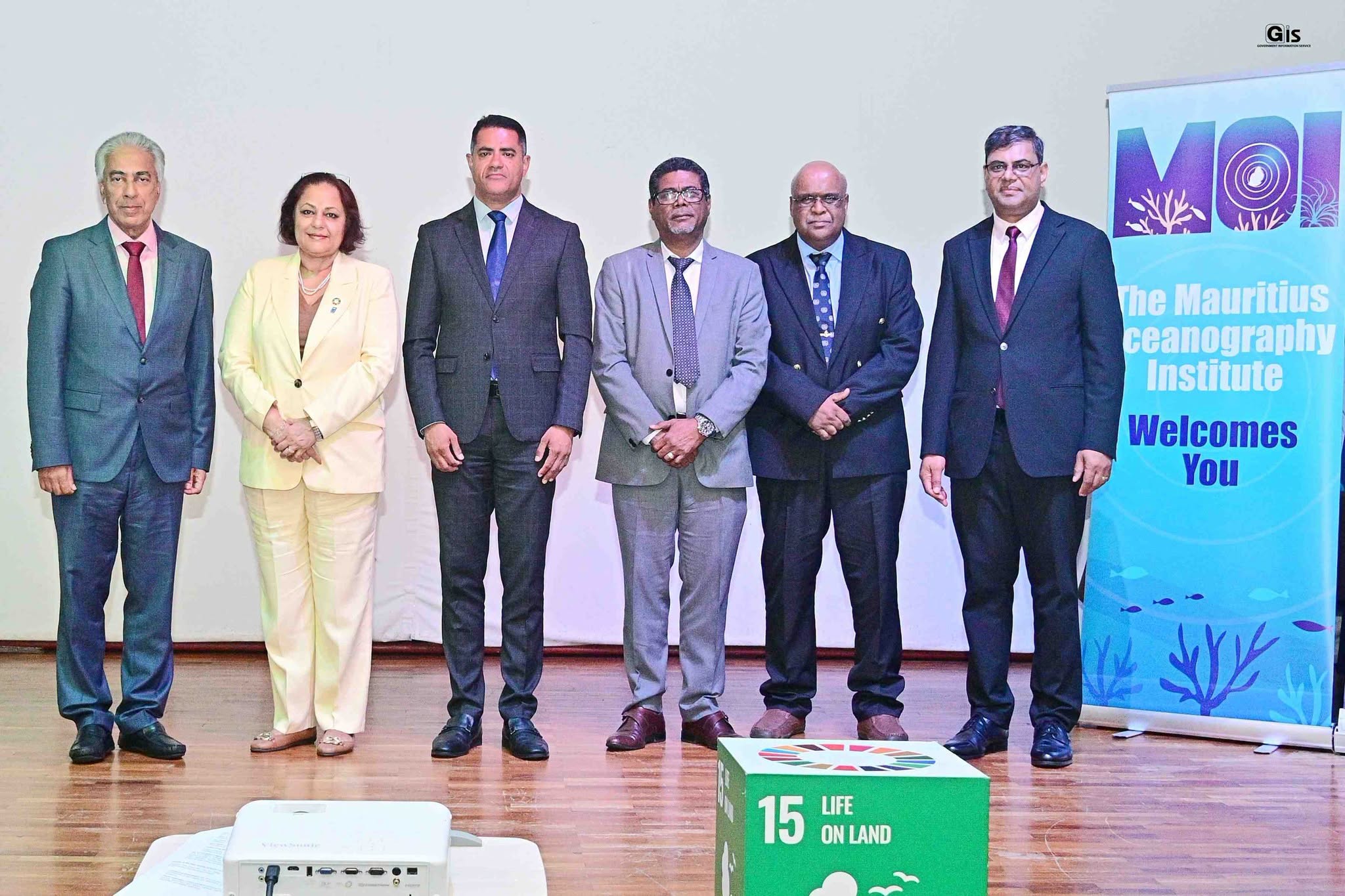
World Maritime Day 2026 was marked on the morning of 24 September 2026 in Mauritius by the inauguration of the Marine Invasive Alien Species Awareness Corner (MIASAC) at the Rajiv Gandhi Science Centre (RGSC) in Bell Village, Port Louis.
The Awareness Corner was established by the Ministry of Agro-Industry, Food Security, Blue Economy and Fisheries, in collaboration with the United Nations Development Programme (UNDP) and the RGSC, to raise public awareness of marine invasive alien species (IAS) and promote understanding of marine biosecurity, ballast water management and biofouling.
The inauguration was held in the context of this year’s World Maritime Day theme, “From Policy to Practice: Powering Maritime Excellence”, which underscores the importance of translating policies, conventions and regulations into practical action.

The event was attended by the Minister of Agro-Industry, Food Security, Blue Economy and Fisheries, Dr Arvin Boolell; Junior Minister, Mr Gilles Fabrice David; the UNDP Resident Representative for Mauritius and Seychelles, Mrs Alka Bhatia; the Chairperson of the RGSC, Mr Partish Chumroo; and other guests.
In his address, Minister Boolell highlighted the strategic importance of the blue economy to Mauritius, noting the Government’s objective of increasing its contribution to 20% of GDP in the medium term. He referred to the risks posed by marine invasive alien species, which can be unintentionally introduced through ballast water and organisms attached to vessel hulls. He moreover underscored the importance of effective ballast water management, regular hull cleaning and other measures to minimise such risks.
In addition, the Minister underlined the role of science, research and innovation in addressing emerging challenges in the maritime sector and noted that the MIASAC would provide a platform for knowledge-sharing and public awareness, particularly among young people, on the protection of Mauritius’ marine ecosystems. He further emphasised the importance of marine protection and biosecurity to the sustainable development of the blue economy.
For his part, Junior Minister David spoke about the global importance of the maritime sector, noting that more than 70% of the Earth’s surface is covered by water and that at least 80% of international trade is transported by sea.
According to him, ballast water and biofouling constitute two major pathways for the transfer of marine invasive alien species. He explained that ballast water can carry aquatic organisms between ports, while biofouling refers to the accumulation of organisms on submerged parts of vessels, including hulls and propellers.
The MIASAC builds on the former Ballast Water Awareness Corner established at the RGSC in 2011 through a collaboration between the Shipping Division, the Mauritius Oceanography Institute and the RGSC. Following a UNDP proposal in December 2021 for USD 50,000 towards its refurbishment, the facility was revamped to reflect its broader focus on marine invasive alien species.
The upgraded Awareness Corner features modernised exhibition areas, interactive multimedia displays and encased marine IAS specimens, as well as educational information on ballast water, biofouling and marine biosecurity. It also provides information on the Ballast Water Management Convention, which entered into force in 2017 to prevent the spread of harmful aquatic organisms and pathogens through ships’ ballast water.
As part of the inauguration, educational tools for outreach activities and virtual reality equipment were handed over to the RGSC to support interactive learning. The inauguration plaque was also unveiled, followed by a visit to maritime exhibitions presented by Emergent Maritime Technologies Ltd and Immersub & Co. Ltd, showcasing technologies and solutions related to marine inspection, hull cleaning and maritime biosecurity.
Source : GIS Mauritius