
Morocco: Nador West Med and Tanger Med 3, Two Strategic Projects to Strengthen the Kingdom’s Port Capabilities
Morocco is accelerating the development of its port infrastructure through two major projects aimed at strengthening its position in international maritime trade. On Wednesday, 28 October 2026, His Majesty King Mohammed VI chaired a working session at the Royal Palace in Rabat, focusing on the progress of the Nador West Med port and industrial complex and the expansion project of Tanger Med, notably marked by the upcoming launch of construction works on the new Tanger Med 3 port.
The meeting provided an opportunity to review the progress of both projects, their next stages of development and their expected economic and social benefits. These initiatives are part of the Kingdom’s vision to develop a high-performance port system capable of strengthening its competitiveness amid the ongoing restructuring of global value chains.
Nador West Med: A New International-Scale Port and Energy Complex
With public and private investments amounting to MAD 54 billion, the Nador West Med (NWM) complex is a major project designed to strengthen Morocco’s logistics, industrial and energy sectors. Developed to complement the services offered by Tanger Med, it combines port infrastructure with industrial, logistics and energy platforms.
Its first container terminal is expected to become operational in the coming days, with an ultimate capacity of 3.5 million TEUs (Twenty-foot Equivalent Units). A second terminal, with a capacity of 1.8 million TEUs, is scheduled to enter service in April 2027. The development of these two facilities represents MAD 8 billion in private investment.

The energy component also plays a key role in the project. It includes the commissioning of a hydrocarbon terminal, supported by a storage area with a potential capacity of 4 million cubic metres, as well as a liquefied natural gas (LNG) terminal capable of handling up to 5 billion cubic metres annually. These facilities will contribute to strengthening the Kingdom’s energy security.
The port’s service offering will also include terminals dedicated to dry bulk and general cargo.
On the industrial front, the dedicated industrial zone is already operational. It currently hosts one operating factory, while three others are under construction. In the short term, the complex is expected to generate 14,000 direct jobs and 20,000 indirect jobs, creating new economic and employment opportunities for local communities.
To support this development, several connectivity infrastructure projects are planned, including the Selouane–Nador West Med railway connection, the Guercif–Nador West Med motorway and the upgrading of the surrounding road network.
Tanger Med 3: An Additional Capacity of 4.5 Million Containers
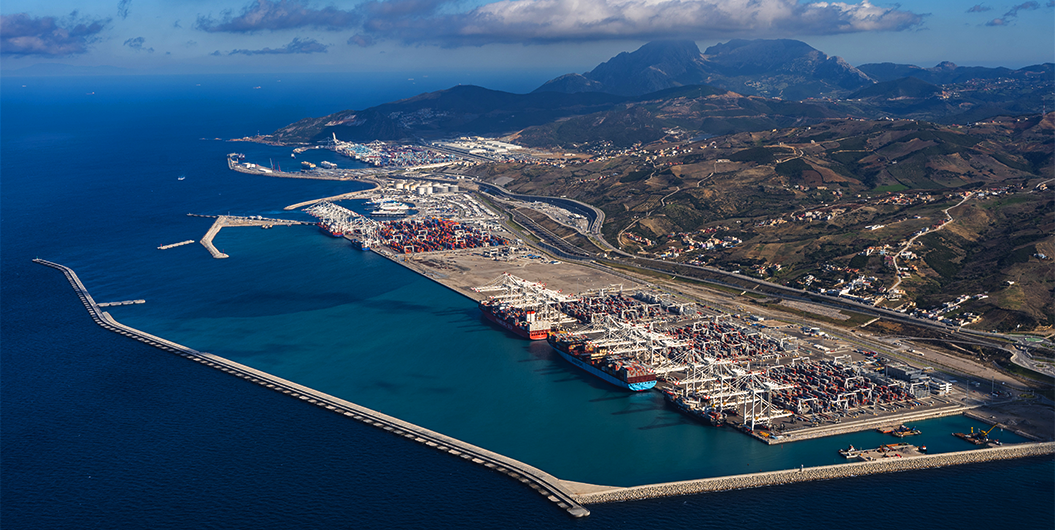
Alongside the development of Nador West Med, Morocco is preparing a new phase of expansion for the Tanger Med port complex through the construction of Tanger Med 3.
Located west of Tanger Med 2, the new port will feature 1,200 metres of quays and provide an additional annual capacity of 4.5 million TEUs. The project represents an investment of MAD 8 billion, with construction works expected to begin shortly.
In this regard, a concession agreement has been signed with Maersk–APM, a major global player in maritime transport, for the development of the new container terminal.
This expansion is part of a broader effort to strengthen existing facilities, which also includes the ongoing expansion of the passenger and ro-ro terminal, as well as the eastern extension of Tanger Med 2.
Upon completion of these new developments, the total capacity of the Tanger Med complex could reach 20 million containers, with the ambition of positioning the port among the world’s top 10 container ports.
Employment, Training and Regional Development at the Heart of Priorities
Beyond investment and increased port capacity, King Mohammed VI stressed the need to ensure that the economic and social benefits of these projects extend to the populations of the provinces concerned.
The Sovereign particularly called for the acceleration of training programmes tailored to the needs of emerging port, industrial, logistics and energy activities, in order to facilitate the professional integration of young people.
This direction highlights the importance attached to integrating major infrastructure projects into their surrounding territories through job creation, local skills development and a more balanced distribution of public and private investment.
With Nador West Med and Tanger Med 3, Morocco is continuing to strengthen its port network and logistics capacity. These two complementary projects are expected to reinforce the country’s role in international supply chains while supporting the industrial, energy and economic development of the regions concerned.