
DCoC States expand Common Maritime Security Lexicon

A new Common Maritime Security Lexicon to support communication and information sharing across regions has been developed by and for States across the across the Western Indian Ocean and Gulf of Aden.
The initiative addresses a fundamental challenge in maritime security cooperation: the same words and concepts can carry different meanings across languages, legal systems, professional disciplines, and national jurisdictions. Such differences can complicate incident reporting, information sharing, the interpretation of legal authority, and coordinated responses to maritime security threats.
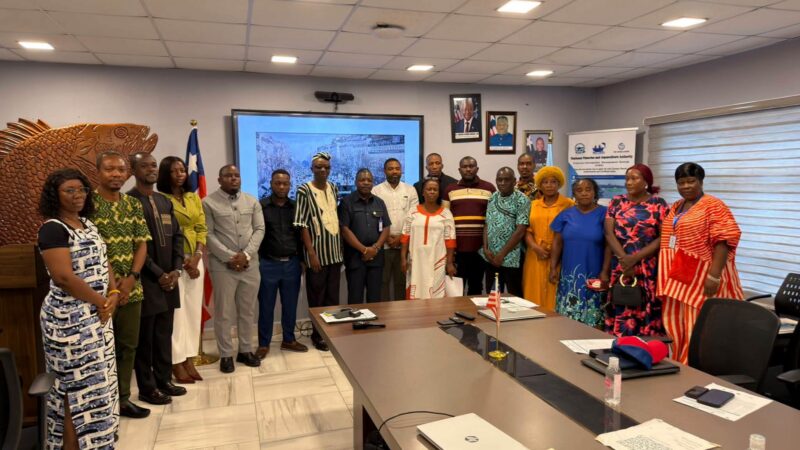
The draft of the expanded Common Maritime Security Lexicon was finalized during a workshop in Addis Ababa, Ethiopia (27 to 30 October). The workshop was organized by the International Maritime Organization (IMO), with financial support from the European Union through the Crisis Response Project for the Red Sea and the Western Indian Ocean (CRP-RedWIO), the workshop brought together representatives* of Djibouti Code of Conduct and its Jeddah Amendment (DCoC/JA) Signatory States, technical experts and regional and international partners to review and expand the Lexicon ahead of the High-Level Meeting.

The expanded Lexicon incorporates terminology that reflects the region’s diverse legal frameworks, institutional mandates, and operational realities. The Lexicon is intended to provide a shared reference for maritime agencies, promoting clearer and more consistent communication, strengthening information sharing and inter-agency coordination, and facilitating effective maritime security cooperation across national boundaries within this diverse region.
Opening the workshop on behalf of the Government of Ethiopia, Vice Admiral Kindu Gezu, Chief of the Ethiopian Navy, emphasized the importance of a common vocabulary in strengthening operational cooperation. “True operational synergy begins with a shared vocabulary,” he said.
Captain Kibru Mesfin, speaking on behalf of the Director General of the Ethiopian Maritime Authority, said: “For Ethiopia, the sea is not distant. It is the lifeline of our foreign trade, the home of a growing national fleet and flag registry, and the workplace of thousands of Ethiopian seafarers… A Common Maritime Security Lexicon allows these differences to become a source of strength rather than confusion, so that when one State reports an incident, every partner reads it in the same way and responds with confidence.”
The agreed draft of the expanded Common Maritime Security Lexicon will be submitted for consideration by the Ninth DCoC/JA High-Level Meeting in Antananarivo, Madagascar (11-13 November 2026).
The expanded Lexicon reflects the broader scope of the 2017 Jeddah Amendment, which extended the scope of regional cooperation beyond piracy and armed robbery against ships to encompass a wider range of illicit maritime activities, including illegal, unreported and unregulated fishing, maritime terrorism, illicit trafficking and environmental crimes. As maritime security challenges become increasingly complex, effective cooperation requires a shared understanding not only of threats but also of the respective roles, responsibilities and legal authorities of the institutions involved.
Mr. Kiruja Micheni, IMO Project Manager, Djibouti Code of Conduct/Jeddah Amendment, emphasized that effective maritime security cooperation requires a whole-of-government and whole-of-region approach. Maritime administrations, navies, coast guards, fisheries authorities, customs, law enforcement agencies, prosecutors and judicial authorities all have important and complementary roles in addressing maritime security threats.
The workshop also demonstrated the importance of regional ownership. Rather than relying solely on terminology developed elsewhere, participants actively contributed terms, concepts and definitions drawn from their national experiences and operational requirements. This ensured that the expanded Lexicon reflects the region’s particular maritime security challenges while respecting the different legal frameworks and institutional responsibilities of participating States.
The Lexicon complements several important initiatives being advanced under the DCoC/JA framework, including the development of a Regional Maritime Security Risk Register and Regional Maritime Security Strategy, as well as efforts under Working Group 3 on Operational Cooperation at Sea to strengthen regional operational coordination.
Together, these initiatives aim to move regional maritime security cooperation beyond dialogue and information exchange towards more coordinated and practical responses to shared maritime security challenges.
*Representatives attended from Bahrain, Comoros, Ethiopia, Kenya, Maldives, Mauritius, Mozambique, Seychelles, Somalia, the United Republic of Tanzania and Yemen. Regional and international organizations represented included the African Union, EU CRIMARIO, Combined Maritime Forces, the Regional Maritime Information Fusion Centre (RMIFC, Madagascar) and the Regional Coordination of Operations Centre (RCOC, Seychelles).
Source : IMO