
Seaweed for development: Who sets the rules and who captures the value?
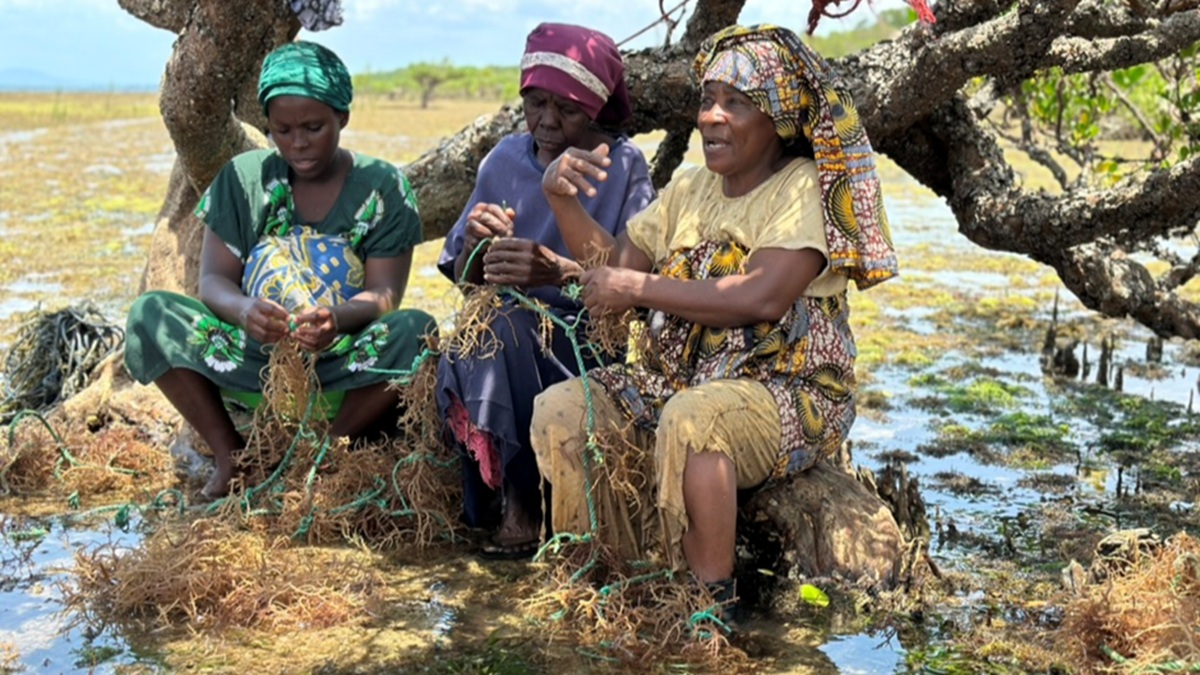
Rapid market growth is outpacing governance, raising questions about value addition and inclusion for developing countries.
As geopolitical tensions reshape global trade and the regulatory environment for emerging industries remains fragmented, seaweed is becoming an unexpected frontline in the transition to a greener economy.
Ahead of the World Trade Organization’s 14th Ministerial Conference (MC14), the sector highlights a broader challenge: How to ensure fast-growing markets for sustainable products remain inclusive, rather than reinforcing existing imbalances in value and rule-making power.
Used in food, pharmaceuticals, cosmetics and biodegradable alternatives to plastics, seaweed sits at the intersection of trade, sustainability and industrial policy. But while demand accelerates, governance frameworks are struggling to keep pace.

New analysis, produced by UN Trade and Development (UNCTAD) as a contribution to the UN Global Seaweed Initiative (UNGSI), shows that global seaweed production has tripled over the past two decades, while exports have quadrupled to reach $3.9 billion in 2022. The findings come as WTO members advance discussions on plastics pollution and standards for sustainable substitutes ahead of MC14.
A fast-growing market with uneven rules
International trade remains concentrated in just 10 to 12 species, while regulation specific to seaweed is limited. Of 109 trade-related measures across plant and animal products, only 18 directly address seaweed and its by-products. Most relate to food safety, plant and animal health requirements, followed by technical and pre-shipment measures.
For developing countries – which dominate seaweed farming – this creates a structural imbalance. While they supply the raw material, they have limited influence over the standards shaping market access.
“Producers need trade frameworks that support value addition rather than restrict it,” said Felaniaina Lantovololona, Director of Aquaculture at Madagascar’s Ministry of Fisheries and Blue Economy.
“When standards are developed without their input, compliance risks becoming a barrier rather than a bridge.”
Fragmented standards, growing competition
Despite rapid growth, national regulations and international standards remain fragmented and often generic. Key gaps include product classification in trade statistics, tailored sustainability standards and coverage under frameworks such as the Codex Alimentarius.
Without greater coordination, this fragmentation can increase compliance costs and create barriers to trade, particularly for smaller producers.
“Regulatory pathways for seaweed products remain inconsistent across markets,” said Elsa Tudal, Project Director for European and International Affairs at France’s Ministry for Ecological Transition.
“Without greater harmonisation, producers – particularly in developing countries – face costs unrelated to the intrinsic quality of their products.”
Value addition gap persists
Value distribution along the seaweed supply chain remains highly uneven.
In 2022, processed products such as agar-agar traded at around $18.7 per kilogram, compared with $1.4 for unprocessed seaweed used in non-food applications. The gap reflects differences in processing capacity rather than product quality.
As a result, many producing countries capture only a small share of the final value, while higher-value processing and standard-setting remain concentrated elsewhere.
Momentum is building to address these challenges. Under the WTO Dialogue on Plastics Pollution Ministerial Declaration, members have committed to advancing standards for alternatives to plastics and strengthening technical assistance for developing countries.
UNCTAD identifies priorities to support more inclusive sector development, including improving product classification, promoting convergence of science-based standards, strengthening regulatory frameworks for non-food uses and enhancing developing countries’ compliance capacity. Better data on non-tariff measures and stronger coordination through initiatives such as UNGSI will also be key.
As MC14 approaches, the seaweed sector underscores a wider reality: In the race to build green industries, the question is no longer just who produces, but who sets the rules and captures the value.
Source : UNCTAD