Biomimicry in the Blue Economy: Toward a Bio-Inspired Blue Economy
The blue economy encompasses all economic activities linked to oceans, seas, lakes, rivers, and their shorelines, while integrating fundamental principles of environmental protection and improved human well-being. It is notably based on the sustainable use of fishery resources, marine biodiversity, and ocean ecosystems for income-generating purposes.
However, beyond the conventional exploitation of the ocean and its resources, water bodies, and coastal zones, a more innovative approach involves drawing inspiration from marine biodiversity and its natural mechanisms to address major challenges such as marine pollution, coastal erosion, and others.
In this context, biomimicry emerges as a key solution, offering sustainable, efficient, and innovative responses to the challenges of the blue economy.

Conceptual Framework of Biomimicry Applied to the Blue Economy
Biomimicry, from the Greek βίος (bíos, life) and μίμησις (mímēsis, imitation), consists of drawing inspiration from living organisms (their forms, materials, properties, processes, and functions) to design more efficient technologies, materials, and systems aimed at addressing major societal challenges.
Although this approach has gained increasing media attention in recent years, drawing inspiration from living systems is not a new concept. Since the dawn of humanity, people have observed the living world to find solutions to the most complex problems they face.
During the Middle Ages, Leonardo da Vinci (1452–1519) already illustrated this bio-inspired approach through his drawings of flying machines, directly derived from his meticulous observations of birds in flight. Thus, throughout the evolution of human society, biomimicry has always been present.
It is therefore only natural that this historically rooted approach finds its place within the blue economy, where observing and understanding marine life becomes essential to meeting the specific challenges of an ocean-based economy.
In this framework, biomimicry applied to the blue economy seeks to learn from marine and coastal ecosystems in order to propose innovative solutions to challenges within the blue economy.
Practical Applications of Biomimicry in the Blue Economy
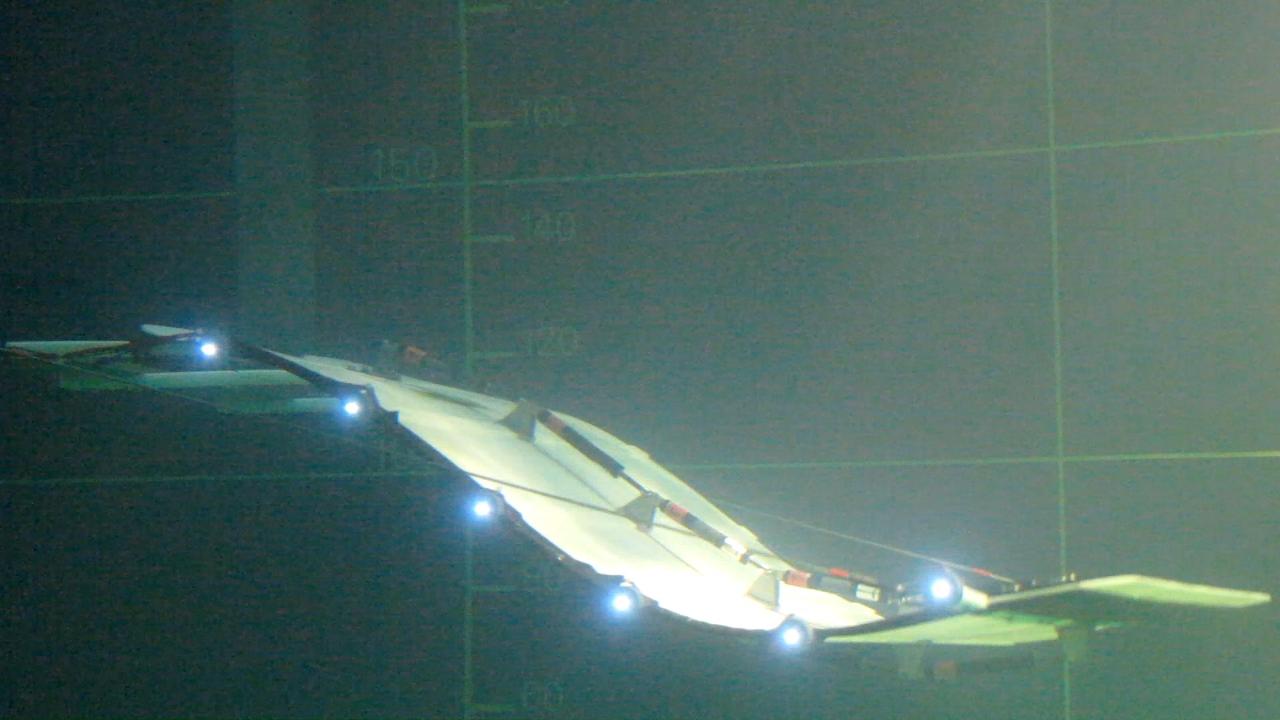
In the field of marine renewable energy, the membrane tidal turbine technology developed by EEL Energy, a French start-up specializing in energy solutions and equipment, perfectly illustrates the contribution of biomimicry.
This device replicates the undulating motion of the caudal fin of certain marine mammals to generate electricity. This biomimetic tidal turbine is notably inspired by the swimming movements of eels and rays.1
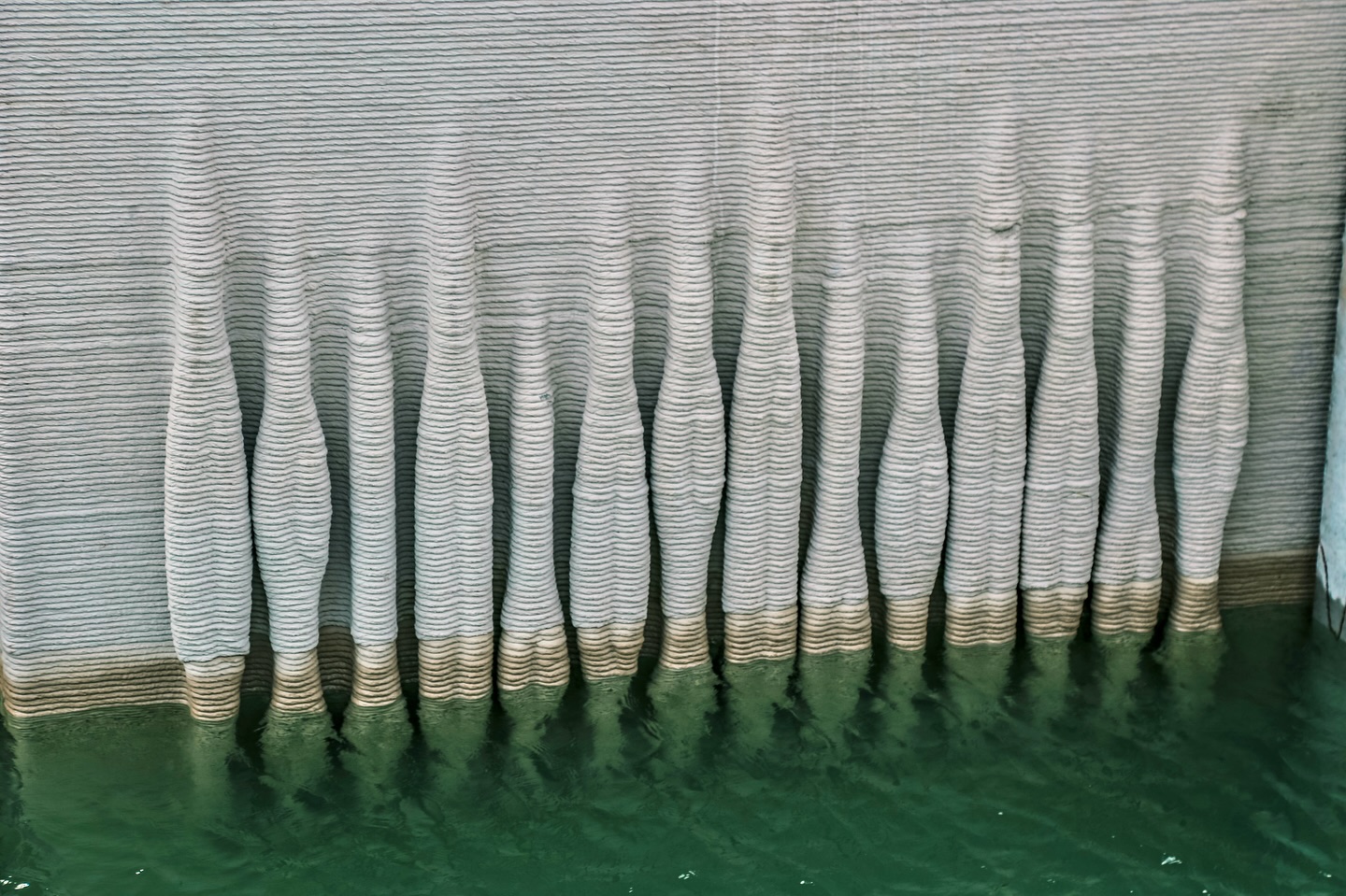
In terms of coastal protection, 3D-printed seawalls designed by Kind Designs, a Miami-based climate technology and construction start-up, are being developed as robust barriers against coastal erosion, flooding, and sea-level rise.
These 3D seawalls also function as dynamic marine ecosystems, promoting biodiversity and contributing to habitat restoration. Their design is directly inspired by natural marine habitat structures such as coral reefs and mangrove roots.²
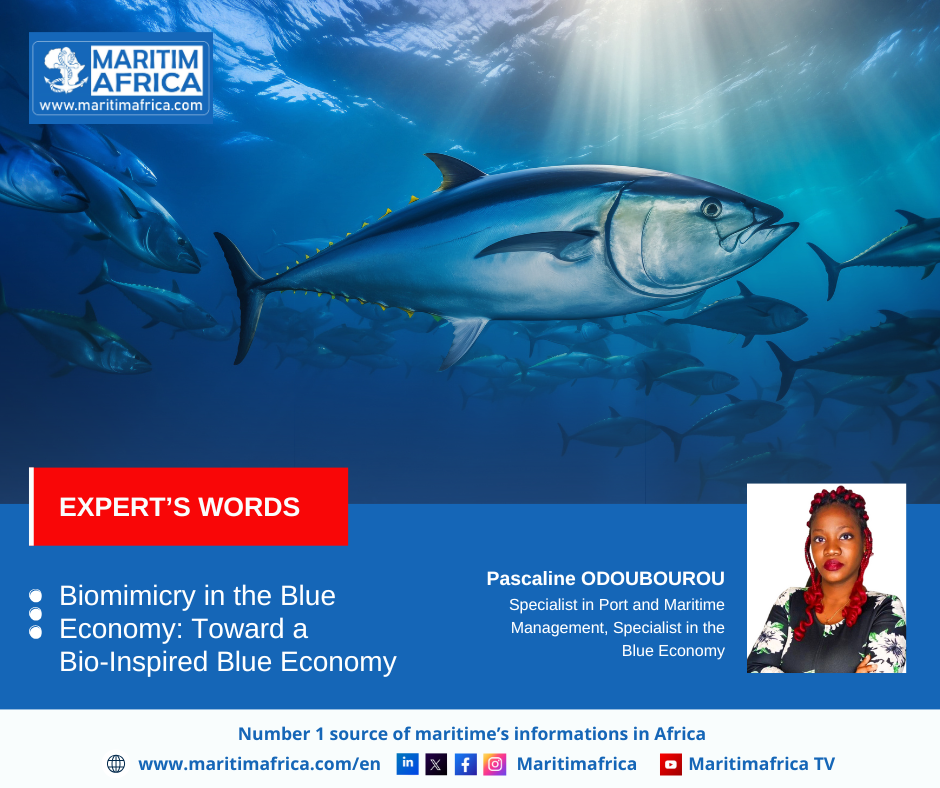
In the shipbuilding industry, Nippon Paint Marine, a global manufacturer of biocide-free marine coatings aimed at improving vessel performance, has developed—through its R&D program—coatings inspired by tuna skin that reduce friction, fuel consumption, and ship emissions.
In 2006, Nippon Paint Marine patented its HydroSmoothXT™ technology, based on water entrapment and the use of hydrogel in self-polishing antifouling paints.
In 2008, the company launched LF-Sea (“Low Friction”), followed in 2013 by A-LF-Sea (“Advanced Low Friction”), developed in collaboration with the Japanese government and shipowners, integrating a patented water-retention system and an anti-corrosion coating. LF-Sea and A-LF-Sea have enabled fuel savings and emission reductions of up to 12.3%.
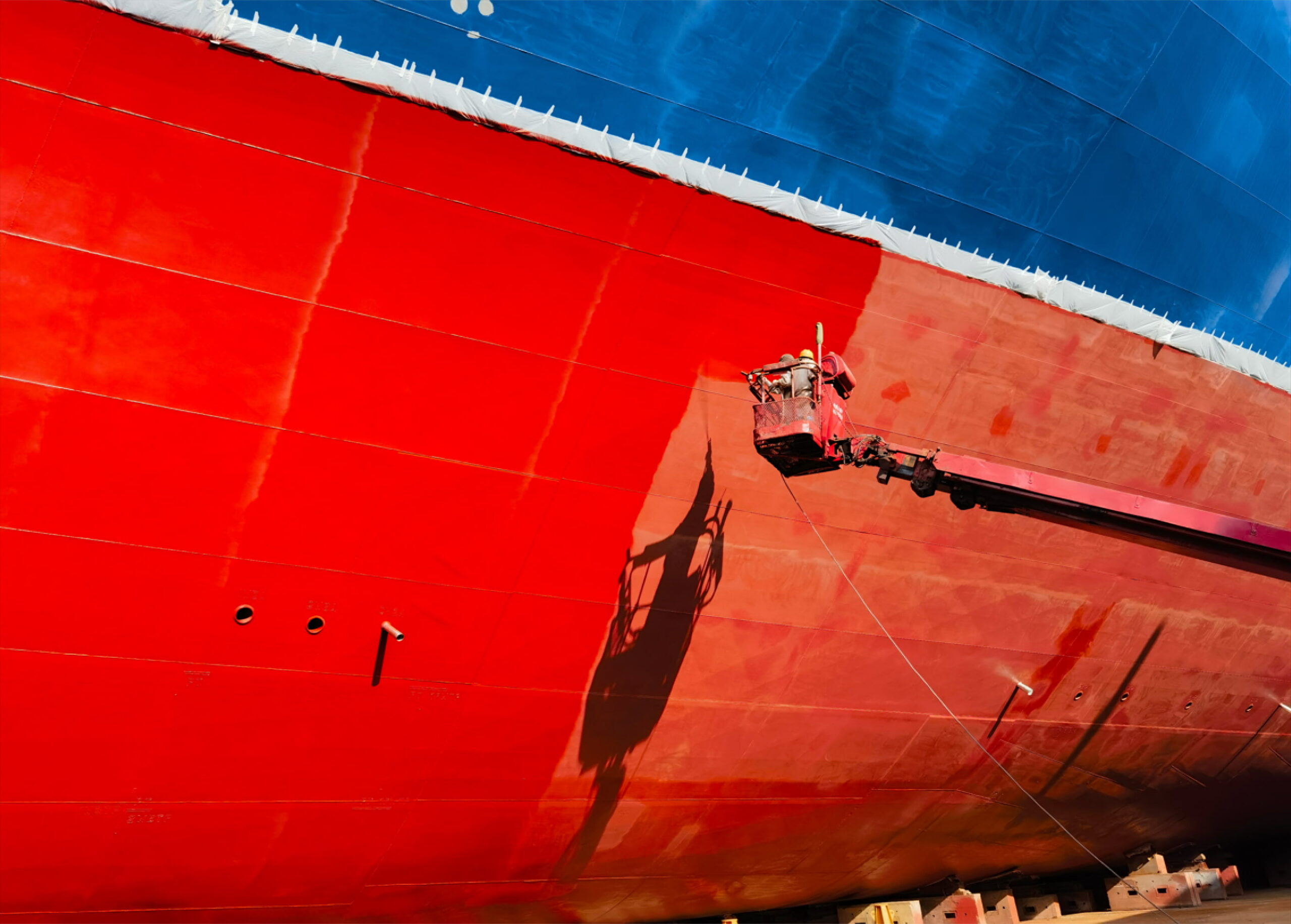
After 15 years of testing, data collection, and analysis of a wide range of data from vessels using its unique range of water-capturing HydroSmoothXT™ coatings, Nippon Paint Marine leveraged nanotechnology to develop a new generation of hydrogel antifouling coatings. In January 2021, the company launched FASTAR XI and XII, capable of delivering up to 8% operational savings compared to conventional paints without hydrogel technology.3
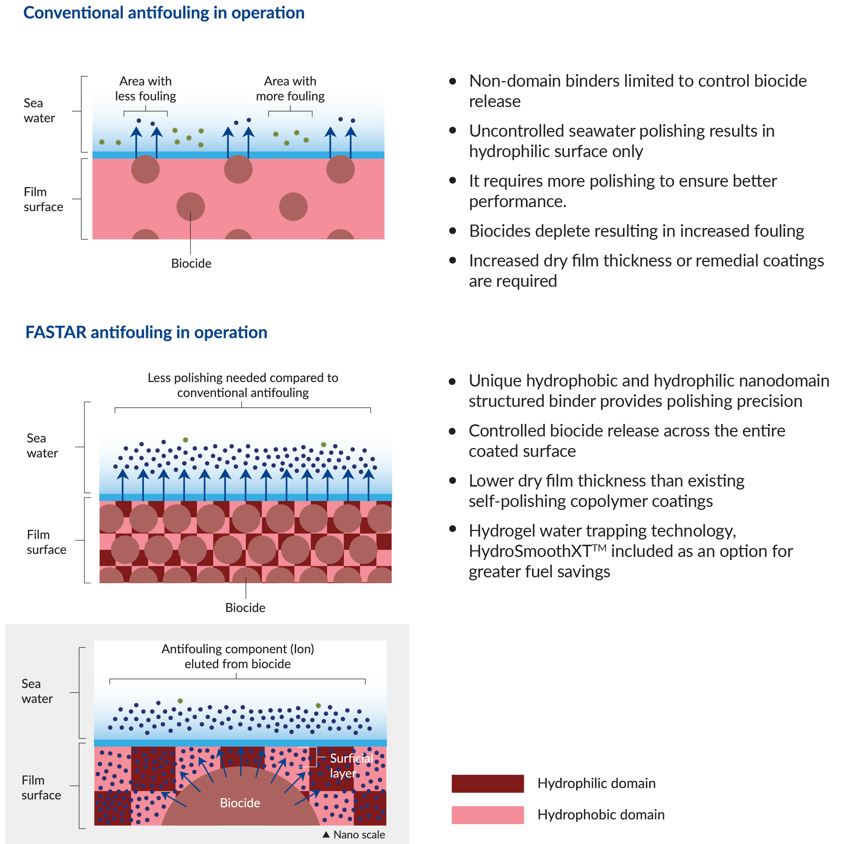
The performance of Nippon Paint Marine’s antifouling coating range, notably LF-Sea, A-LF-Sea and FASTAR, has been applied to more than 5,000 vessels.
Biomimetic Projects Under Development in the Blue Economy

In the shipbuilding industry, bionic ship propellers coated with a surface inspired by dolphin skin—particularly that of pilot whales—have been developed by researchers at the Ningbo Institute of Materials Technology and Engineering (NIMTE), a public research and development (R&D) institute in Zhejiang Province, China, co-founded in 2004 by the Chinese Academy of Sciences (CAS), the People’s Government of Zhejiang Province, and the People’s Government of Ningbo Municipality.
In collaboration with COSCO SHIPPING Energy Transportation,5 NIMTE researchers tested these bionic-skin propellers on a Very Large Crude Carrier (VLCC) with a capacity of 300,000 tonnes. During trial voyages lasting more than 200 days and covering over 35,000 nautical miles (approximately 65,000 km) between Chinese coastal ports and major ports in the Middle East, the propellers achieved a 2% fuel saving for the tanker.
The researchers estimate that the cost of applying this bionic dolphin-skin coating to a propeller would be around USD 20,000, enabling annual savings of more than USD 140,000 while reducing CO₂ emissions by over 900 tonnes.6
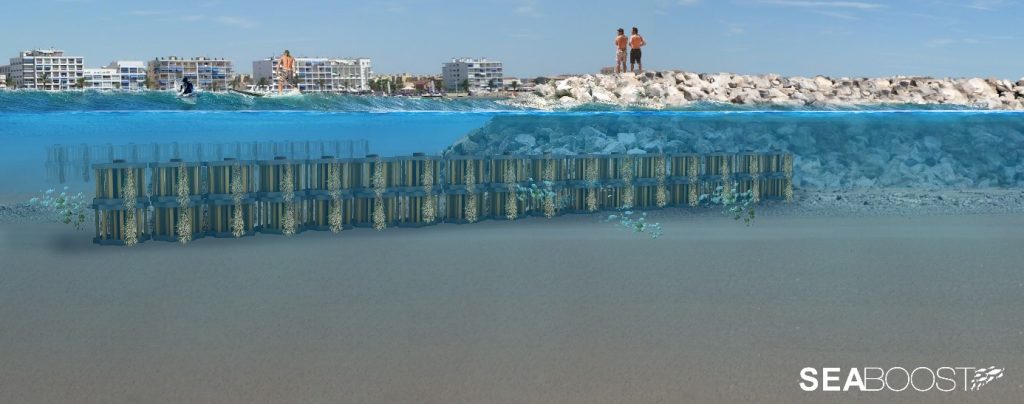
The PEGASE7 Project (Protection against Erosion of the Grau d’Agde Beach and Safeguarding of Ecosystems) is an innovative coastal protection initiative based on a soft, eco-inspired solution modeled on mangroves, capable of dissipating wave energy responsible for shoreline retreat.
Anchored on piles, the partially permeable modules integrate into sediment dynamics and create new habitats for marine life, including mussels, oysters, barnacles, algae, octopuses, sea bream, and more.
This pilot project, deployed on the beach of Grau d’Agde in France, is led by Seaboost, a French company specializing in innovative solutions for marine biodiversity restoration. It is part of the Plan Littoral 21 for the Occitanie Region and was carried out in partnership with Agglo Hérault Méditerranée, the City of Agde, Egis, and the Pôle Mer Méditerranée.
The project enabled Seaboost to meet a major challenge: combating coastal erosion while preserving biodiversity.
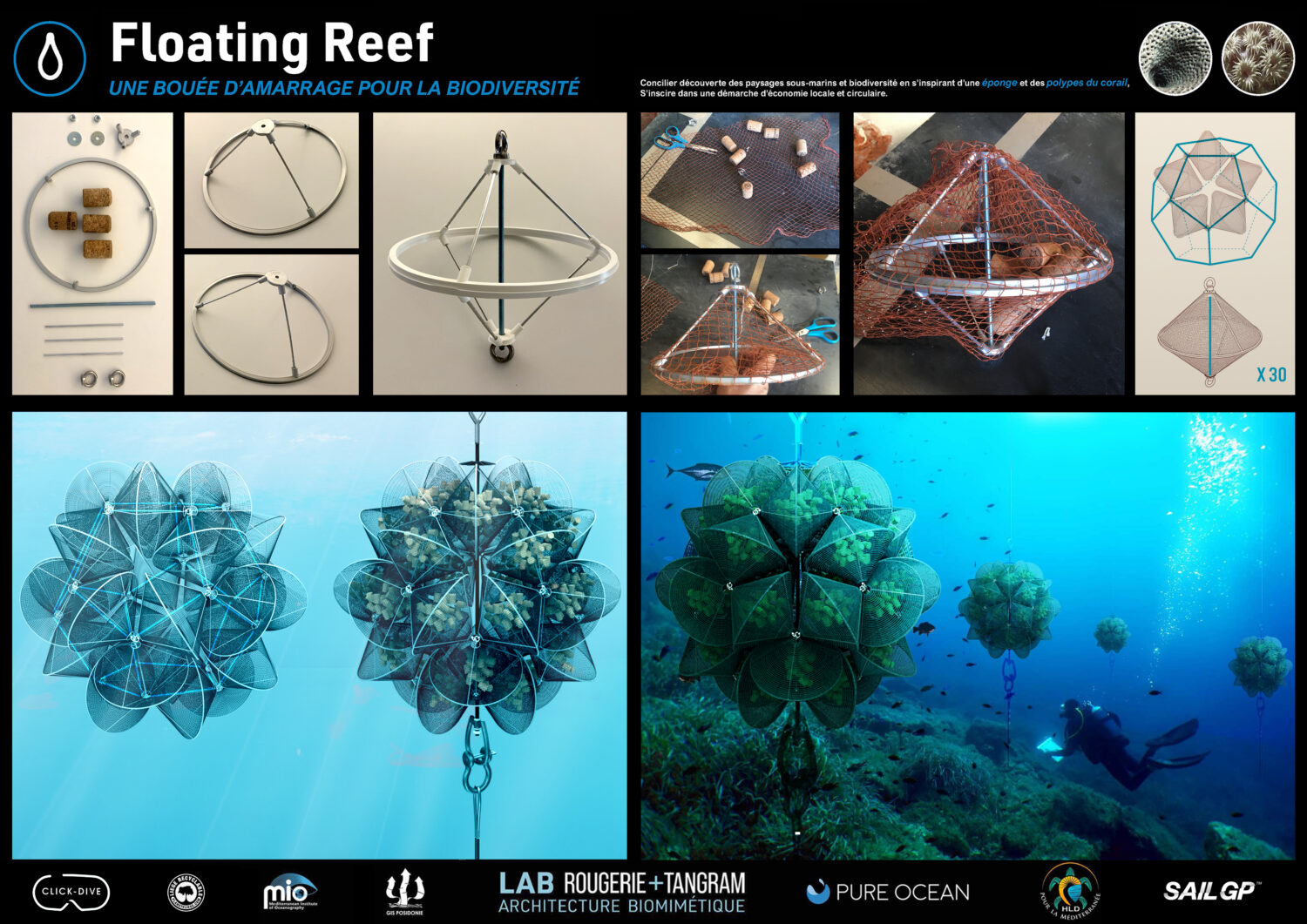
With the aim of preserving Posidonia seagrass meadows in the Mediterranean and promoting local biodiversity, the FloatingReef project has developed a biomimetic subsurface mooring buoy inspired by sea sponges and coral polyps.
In its first development phase, the floating artificial reef “FloatingReef” was designed using 3D-printed concrete, intended to mimic the internal organization of Ascon-type sponges.
Subsequently, the project’s architects lightened and simplified the concrete structure by opting for a metallic spherical framework. The structure’s buoyancy is ensured by cork stoppers contained within an assembly of nets sourced from a reuse stream of waste from local fisheries. Modules inspired by Mediterranean coral polyps allow gas and nutrient exchanges with the surrounding habitat, while providing hiding places and shelters for small invertebrates and juvenile fish.
The final developments of the project further reduce the weight of the floating reef by limiting the use of metallic framework in favor of 3D-printed biopolymer modules. The cork stoppers are now contained within multiple modules, whose precise assembly strengthens the overall structure while allowing water to flow through the reef.8
The FloatingReef project, led by Rougerie Tangram, GIS Posidonie, and the Mediterranean Institute of Oceanography (MIO), benefits from the support of HLD for the Mediterranean, a long-standing patron of this innovation.
The first test buoys were immersed at two experimental sites around the Frioul archipelago, near Marseille (France), an area characterized by intense recreational boating activity.
Currently, six buoys have been deployed and are subject to scientific monitoring to assess their ecological and environmental benefits.
Biomimicry: An Essential Tool for the Development of the Blue Economy in Africa
Biomimicry in the blue economy is not merely a passing trend; it is a genuine development philosophy that promotes a blue economy which functions by learning from the ocean—its mechanisms, its marine biodiversity, and its marine and coastal ecosystems.
For the African continent, endowed with more than 30,000 kilometers of coastline, vast wetlands, major rivers, and unique marine ecosystems, biomimicry offers concrete opportunities to address key challenges such as coastal protection, the restoration of marine and coastal ecosystems, and more.
However, developing a bio-inspired blue economy in Africa requires targeted investments in research, training, and innovation, as well as the establishment of strong partnerships among universities, research centers, startups, ports, public institutions, and local stakeholders.
Resources:
2 https://www.3dnatives.com/digues-imprimees-3d-06032024/#!
4 https://www.nipponpaint-holdings.com/en/global_topics/20250930ir01/
5 https://english.news.cn/20240716/c6adddcd7fd14655a472151f7462870b/c.html
6 https://newatlas.com/science/dolphin-mimicking-propeller-increases-fuel-efficency-cargo-ships
8 https://www.pure-ocean.org/nos-projets/floating-reef/#tab-id-1
 By Pascaline Odoubourou,
Specialist in Port and Maritime Management,
Specialist in the Blue Economy