GMA and US Coast Guard Conclude Joint Strategic Review of Ghana’s Port Security Ecosystem
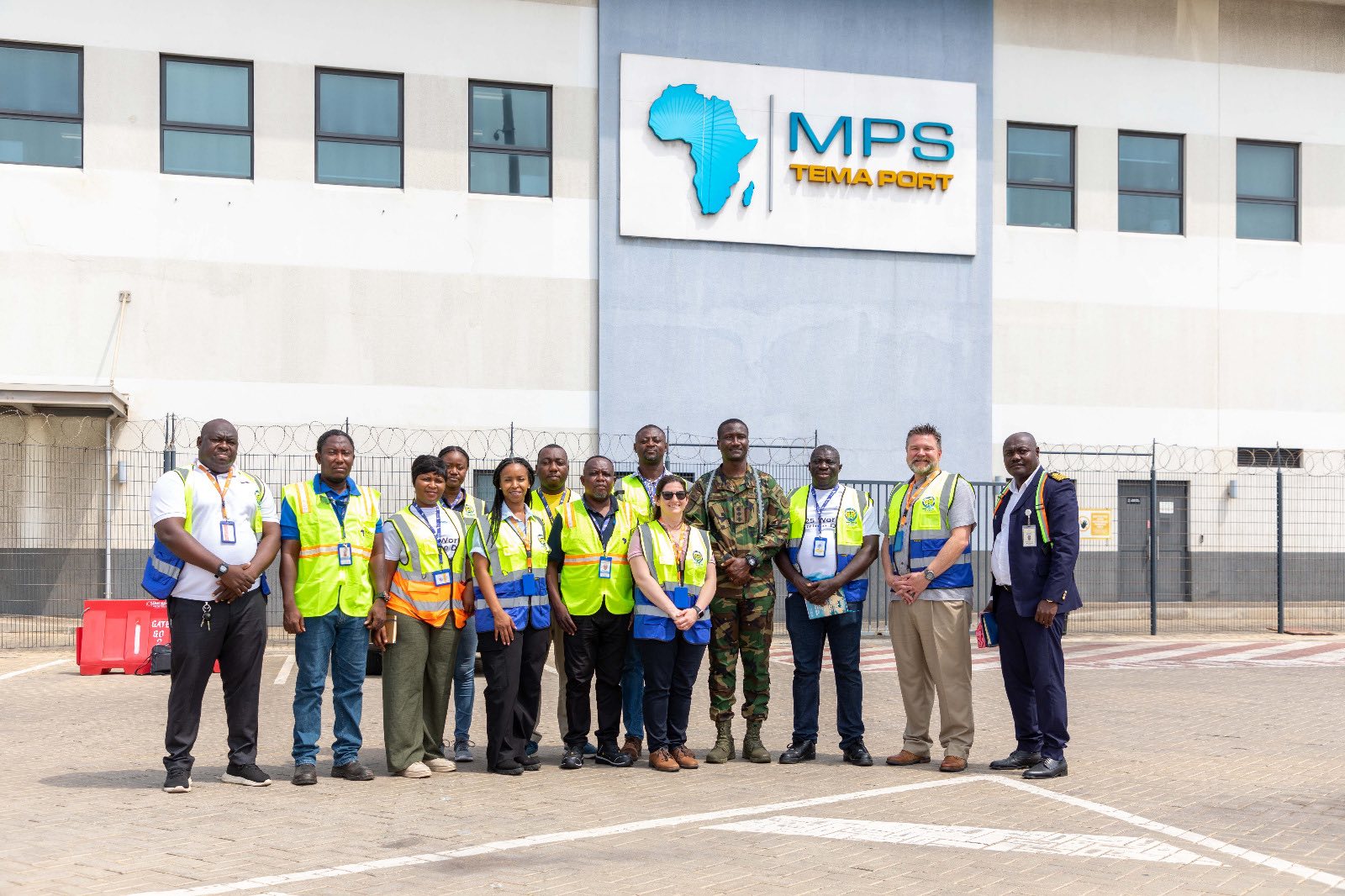
A Delegation from the United States Coast Guard (USCG) has concluded a three-day assessment of Ghana’s maritime security infrastructure, expressing high confidence in the safety protocols at the Tema and Takoradi Ports.
The inspection, conducted in collaboration with the Ghana Maritime Authority (GMA) under the USCG’s International Port Security (IPS) Program, serves as a critical verification of Ghana’s compliance with the International Ship and Port Facility Security (ISPS) Code.
These inspections serve as a vital stress test of a port’s security ecosystem, evaluating physical infrastructure, operational procedures, and information-sharing protocols.

The US Coast Guard Team, led by the Chief of Capacity Building and Technical Assistant, Scott Wolland and accompanied by Crystal Wilson and Stephanie Alvarez, worked together with their Ghanaian counterparts to conduct the inspection from January 13 to 16, 2026.
Stress Test
This joint exercise sought to “stress test” Ghana’s port security ecosystems by evaluating physical infrastructure, identity management, and information-sharing protocols at GPHA Terminals One and Two, the Meridian Port Services (MPS) Terminal Three, and the Port of Takoradi.
During the exercise, the Port Security Manager at the Tema Port, Col Daniel Atobrah Bondah, highlighted the seamless inter-agency framework that allows the Marine Police, Ghana Navy, Narcotics Control Commission, and the FDA to operate under a unified security umbrella together with the port security.
Bilateral Relations
Mr. Wolland, in his remarks, indicated that the inspections were conducted under the long-standing bilateral relations between Ghana and the United States.
That he said also provided the team an invaluable opportunity to share best practices, emphasizing that robust port security is a global necessity and essential for ensuring safe trade within the West African sub-region and between Ghana and the rest of the world.
Mr Wolland further explained that the USCG works alongside designated authorities for the ISPS Code in every nation that trades with the US, stating that these bilateral relationships are critical given the evolving dynamics of the global supply chain and maritime information systems, making it imperative that both nations operate in lockstep.
During a debriefing session with the Director General of the Ghana Maritime Authority (GMA), Dr Kamal-Deen Ali (Naval Capt Rtd), Mr Wolland proposed strategic enhancements by way of security simulations to test existing protocols and identify potential bottlenecks.
He also encouraged the GMA to consider the implementation of an external audit system to provide an objective “check and balance” for internal security arrangements.
Cyber Security
Mr Wolland also encouraged that a broad awareness of security through refresher courses for non-security personnel, including administrative and operational staff, which he said would further ensure a port-wide culture of security awareness.
Mr. Wolland suggested a critical focus on emerging threats such as cybersecurity, which he described as the next frontier of port resilience, in strengthening digital defense.
He emphasized that as ports become more automated, cybersecurity training for staff ought to be continuously enhanced to stay ahead of potential risks to maritime data and infrastructure.
GMA
The Head of Maritime Security, Search and Rescue at the GMA, Mustapha Adamah, in his remarks pointed out that between 2023 and December 2025, Ghana’s ports have seen remarkable improvements in security.
That he said followed the implementation of the recommendations from previous inspections and audits regarding specific vulnerabilities that ought to be addressed by the port authority and private operators.
The Director General of the GMA, Dr Ali, commended the USCG for their sincere and productive feedback from the evaluation.
He noted that the GMA would immediately begin coordinating with other agencies to develop new drill scenarios and further update the International Maritime Organization (IMO) Platform with the latest security data.
Dr Ali also assured of the GMA’s resolve to continue working to improve security of the country’s maritime domain, which he described as the cornerstone of Ghana’s economic development and the country’s reputation as a leader in international trade within the West-African sub-region.
Source : Ghana Maritime Authority