Maritime Organisation of West and Central Africa: Dr. Paul Adalikwu Re-Elected for a Second Term, Accelerates Africa’s Blue Economy Agenda
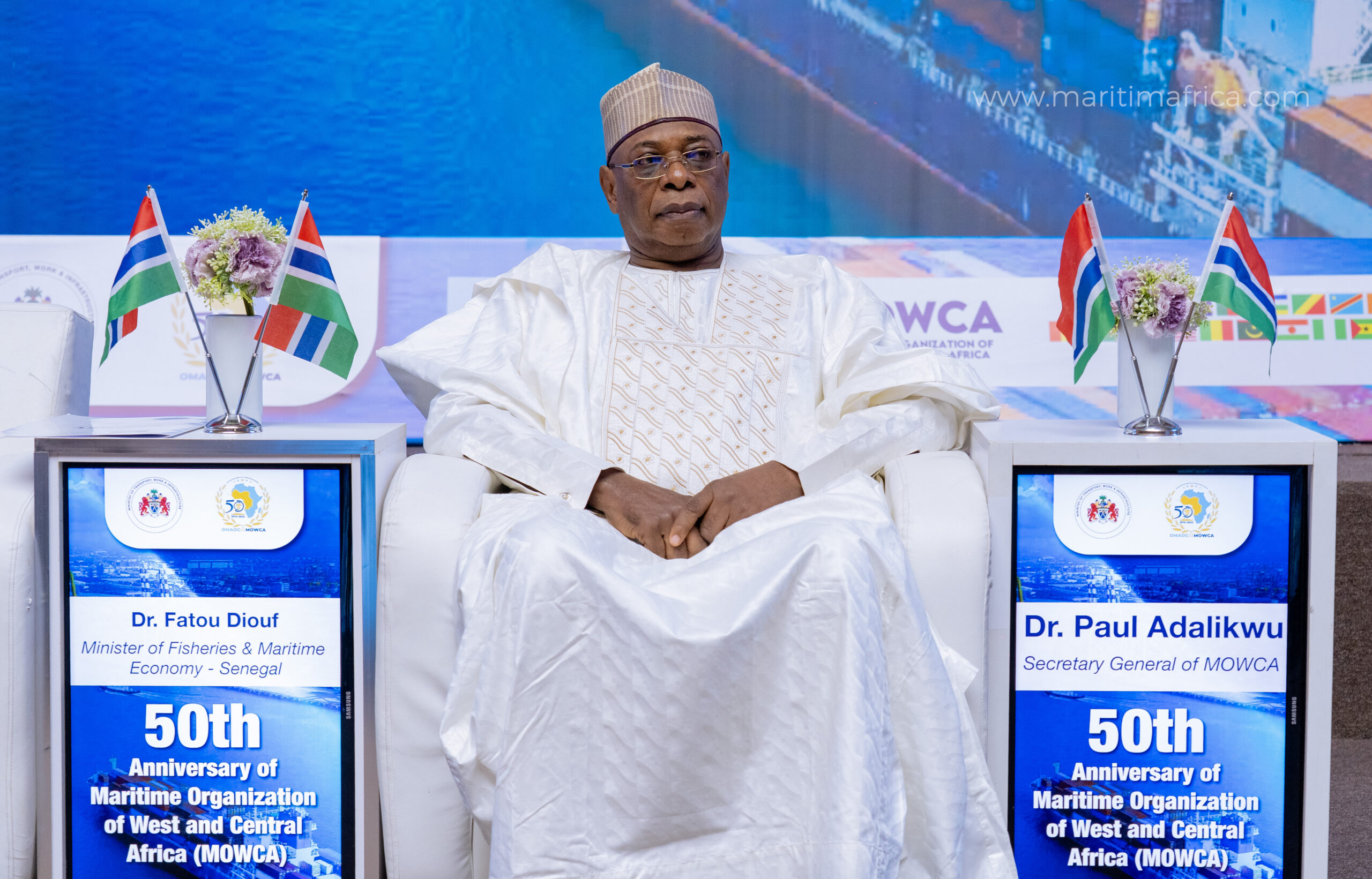
Re-elected unanimously during the 19th General Assembly in Banjul, Dr. Paul Adalikwu will lead the Maritime Organisation of West and Central Africa (MOWCA) for another four-year term. His renewed mandate comes at a pivotal moment for the maritime sector Africa, as the region advances reforms in maritime security, regional integration, and the competitiveness of maritime transport Africa.
Unanimous Re-Election in Service of Africa’s Maritime Sector
On February 19, 2026, ministers from MOWCA’s 25 member states unanimously renewed their confidence in Dr. Paul Adalikwu. The decision recognizes the institutional reforms implemented since 2022 to reposition the organization as a central pillar of maritime governance in West and Central Africa.
MOWCA Chairman and Gambian Minister of Transport, Works and Infrastructure, Ebrima Sillah, praised a leadership that has strengthened the role of coastal and land-linked countries within the global maritime ecosystem.

Ghana’s Minister of Transport, Joseph Bukari Nikpe, highlighted the strategic importance of maritime transport Africa in driving economic transformation, particularly through increased local value addition to exports such as cocoa.
Maritime Security and African Shipping Performance: Tangible Progress
Strengthening the Yaoundé Architecture and Combating Piracy
During his first mandate, Dr. Adalikwu reinforced the implementation of the Yaoundé Architecture, the cornerstone of regional maritime security cooperation in the Gulf of Guinea. Key actions included:
- Enhanced implementation of the ISPS Code
- Acquisition of naval assets
- Real-time information sharing through CINFOCOM
- Community-based maritime intelligence initiatives
These efforts have contributed to a significant decline in piracy incidents, improving the performance of African shipping along one of the continent’s most strategic maritime routes.
MOWCA also supported the adoption of stronger legal frameworks, including Nigeria’s SPOMO Act, and encouraged the prosecution of maritime crimes in countries such as Nigeria and Togo.
Regional Integration and Modernization of African Port Infrastructure
Towards a Regional Maritime Development Bank
A flagship initiative of Dr. Adalikwu’s leadership is the revival of the Regional Maritime Development Bank (RMDB), designed to finance:
- Modernization of African port infrastructure
- Sustainable maritime transport projects
- Strategic investments in the blue economy Africa
This financial mechanism aims to address structural challenges in the maritime sector Africa, including underfunded ports, low vessel ownership rates, and foreign dominance in maritime value chains.
Promoting Cabotage and African Maritime Logistics Corridors
The Secretary General advocates for a continent-wide cabotage regime that prioritizes African shipowners, investors, and maritime professionals. This approach aligns with broader efforts to strengthen African maritime logistics corridors and enhance intra-African trade integration.
MOWCA is also supporting:
- The development of dry ports for land-linked countries
- The establishment of a Regional Transport Observatory
- A harmonized Regional Maritime Code
- An Integrated Sub-Regional Coast Guard Network
Human Capital, International Partnerships and the Blue Economy Africa
Recognizing that competitiveness in maritime transport Africa depends on skilled professionals, MOWCA secured a $1.3 million agreement with Indonesia to train 96 seafarers from member states.
The organization has also deepened collaboration with the International Maritime Organization (IMO), signing a Memorandum of Understanding focused on professional training, maritime safety, and sustainable maritime development Africa.
Dr. Adalikwu reaffirmed his commitment to promoting cost-effective and environmentally sustainable shipping, aligned with the ambitions of the blue economy Africa: economic diversification, job creation, and sustainable exploitation of marine resources, including fisheries and aquaculture in Africa.

Towards a Unified African Maritime Organization
Beyond the sub-region, the Secretary General is pushing for the transformation of MOWCA into a broader African Maritime Organization (AMO), aimed at unifying Africa’s voice in global maritime affairs.
Such a transformation would strengthen the continent’s influence in international negotiations related to maritime trade, African maritime routes, environmental regulation, and global shipping governance.
A New Strategic Phase for African Ports and the Blue Economy
At a time when African ports are striving to enhance competitiveness and integrate more effectively into global supply chains, Dr. Adalikwu’s re-election signals continuity and strategic ambition for West and Central Africa.
Through strengthened maritime security, modernization of African port infrastructure, promotion of cabotage, and the development of dedicated financial instruments, MOWCA is positioning itself as a catalyst for transformation within the maritime sector Africa.
For investors, policymakers, and industry stakeholders in maritime transport Africa, the coming years will be decisive in unlocking the full potential of the blue economy Africa as a driver of sustainable growth.