Meeting between the President of Port Said Chamber of Shipping and the Minister of Investment and Foreign Trade to improve customs clearance procedures and logistics centers performance
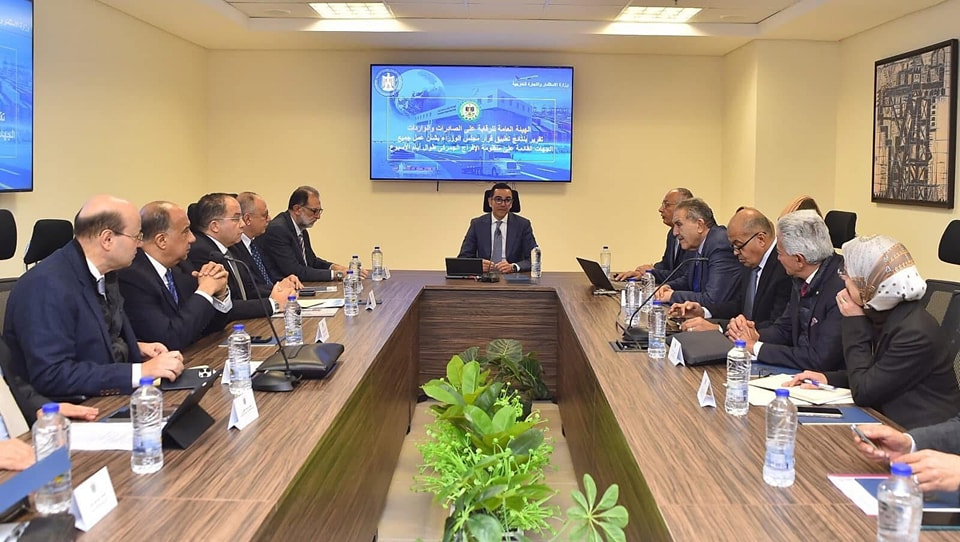
Deputy Adel El-Lamai, President of Port Said Chamber of Shipping, recently participated in a meeting with the Minister of Investment and Foreign Trade to examine ways to improve the efficiency of customs clearance procedures and logistics centers performance. The meeting, chaired by Engineer Hassan El-Khatib, Minister of Investment and Foreign Trade, was held in the presence of Major General Essam El-Naggar, Chairman of the General Organization for Export and Import Control, representatives from the Federation of Chambers of Commerce, the Alexandria Chamber of Shipping, and several key officials from related ministries.
Deputy Adel El-Lamai emphasized the need to facilitate procedures for electronic system users and improve services for the business community, explaining that logistics centers play a major role in simplifying procedures.
The Minister highlighted the State’s commitment to improving the customs clearance system to facilitate procedures for the business community and streamline Egyptian foreign trade. He stressed the importance of strengthening efforts from various stakeholders to reduce the time and cost of customs clearance procedures to just two days next year.

El-Khatib requested an increase in daily working hours and working days in bank branches serving the customs clearance system and shipping agencies. The focus is on simplifying and accelerating procedures, as well as complete coordination through the “single window” electronic platform. A joint commission will be formed, including the foreign trade sector, customs, the General Federation of Chambers of Commerce, and all control bodies, to hold monthly meetings to address difficulties faced by investors and shipping agencies. This commission will also aim to take advantage of the benefits offered by the “single window” platform, resolve port congestion issues, address staff shortages in the customs system, and improve staff skills through continuous training aligned with the modernization and automation of the customs system.