Rear Admiral Mohamed Lamine Fadika, an Iconic Figure in Contemporary African Maritime History

Born on August 22, 1942, in Man, a major city in western Côte d’Ivoire, Mohamed Lamine FADIKA is an iconic figure in contemporary African maritime history. His brilliant career, marked by pioneering initiatives and high-level international responsibilities, reflects a deep commitment to the maritime, naval, port, and environmental development of Côte d’Ivoire and the African continent.
1962 – 1966: A Path of Excellence between Abidjan and France
In June 1962, he earned a Baccalauréat in Elementary Mathematics with honors (“mention Bien”) from the Lycée Classique of Abidjan. He then pursued Higher and Special Mathematics studies in France in preparation for the entrance exam to the French Naval Academy in Brest. In 1963, he won the prestigious Zellidja General Competition, receiving first prize for a study on Le Corbusier and modern sacred architecture: the case of the Chapel of Ronchamp (Belfort) and the Dominican convent of La Tourette (Lyon).
In 1964, he was admitted to the French Naval Academy in Brest, where he obtained the English “Proficiency” certificate before graduating in 1966 as a naval engineer, also earning degrees in mathematics and physics.

1967 – 1974: First Ivorian Officer in the National Navy and Military Rise
In July 1967, he became the first Ivorian officer in the National Navy. He was promoted to Ensign 1st Class in September 1967, d’Ivoire, and the construction of major health centers in San Pedro. Lieutenant in April 1969, and Deputy Commander of the Navy in January 1970. He was appointed Commander of the National Navy in August 1970. In 1973, he became the military attaché for the National Armed Forces of Côte d’Ivoire (FANCI) at the Ivorian Embassy in Paris. From 1973 to 1974, he attended the Higher Naval War College in Paris, earning the Higher Military Studies Certificate in July 1974. He was promoted to Corvette Captain in April 1974.
1975 – 1987: Maritime Diplomacy, Port Reforms, International Leadership, and Environmental Commitment
In May 1975, he became the founding president of the Ministerial Conference of West and Central African States on Maritime Transport (MINCONMAR). That same year, he chaired the African Group at the 3rd session of the Third United Nations Conference on the Law of the Sea held in Geneva — a conference that developed and adopted the new International Law of the Sea, including the establishment of the 200-nautical-mile “Exclusive Economic Zone” concept, to which the African Group made an original and decisive contribution. In 1977, he was promoted to Frigate Captain.
Between 1976 and 1986, under his authority and at his initiative, pioneering actions were carried out that transformed the Port Autonome d’Abidjan into a unique model in sub-Saharan Africa. These included the implementation of analytical accounting, the construction of a container terminal equipped with gantry cranes, the establishment of a health insurance
As President of the international symposia on ocean exploitation, known as “OCEANEXPO 80,” held in Bordeaux in March 1980, he also presided in March 1981 over the Conference of Plenipotentiaries of West and Central African States, which developed and adopted the Abidjan Action Plan and the Abidjan Convention for the Protection and Development of the Marine Environment in twenty-five sub-Saharan countries.
In June 1983, he was unanimously elected President of the African Group and President of the Group of 77 for maritime affairs, during the 6th session of UNCTAD in Belgrade. As President of the Group of 77, he served as spokesperson for 125 developing nations in the North-South dialogue on the New World Order of the Sea.
From November 18, 1983, to December 17, 1987, he directed national policy on naval, maritime, and port affairs, as well as on marine and lagoon environmental matters. On May 21, 1984, he was appointed by presidential decree as President of the National Environmental Commission, in charge of coordinating, developing, and implementing Côte d’Ivoire’s comprehensive environmental policy, both nationally and internationally.
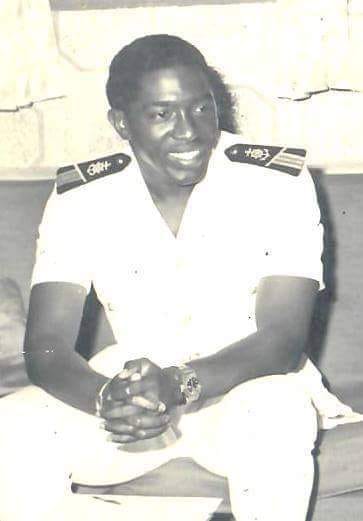
In July 1984, he was unanimously elected by the one hundred delegations present as President of the United Nations Conference of Plenipotentiaries on the Conditions for the Registration of Ships.
In March 1985, he was appointed member of the United Nations World Commission on Environment and Development. This twenty-member commission, created during the 37th session of the UN General Assembly in April 1984, was tasked with conducting a global study on environment-development interactions with a view toward international development prospects by the year 2000 and beyond.
1993–1999: Energy Vision and Structuring Projects for Côte d’Ivoire
In March 1993, he was promoted to the rank of Rear Admiral. From December 1993 to January 1996, under the authority of President Henri Konan Bédié, he initiated and implemented a bold national and internationally relevant energy policy: an electrification project for 250 villages per year in Côte d’Ivoire, and a “Toile d’Araignée Énergétique sous-régionale en Afrique de l’Ouest” project centered on Côte d’Ivoire.
In January 1996, he created and launched the industrial project “Abidjan, Future Rotterdam of Africa,” with the ambition of transforming Abidjan into a strategic city with major infrastructure in West Africa, a key regional hub, and an international petroleum hub, through strong and sustained growth in the oil and gas sector — envisioned as the new driving force of Côte d’Ivoire’s economy for the decades to come.
In July 1997, he received in Paris the “Oscar of Oscars” of African Managers for the year 1997.
Tributes and Legacy
In recognition of his outstanding contribution to the Ivorian nation and to the African continent, an offshore patrol vessel of the P400 class in the Ivorian Navy today bears his name: “REAR ADMIRAL FADIKA”. This symbolic tribute highlights the remarkable career of this officer — a pioneer of the Ivorian Navy, a key actor in port development, a naval diplomat, and a visionary leader.
Research and writing by Pascaline ODOUBOUROU