SFTC 2026 Programme to Address Volatility, Regulation and Green Finance
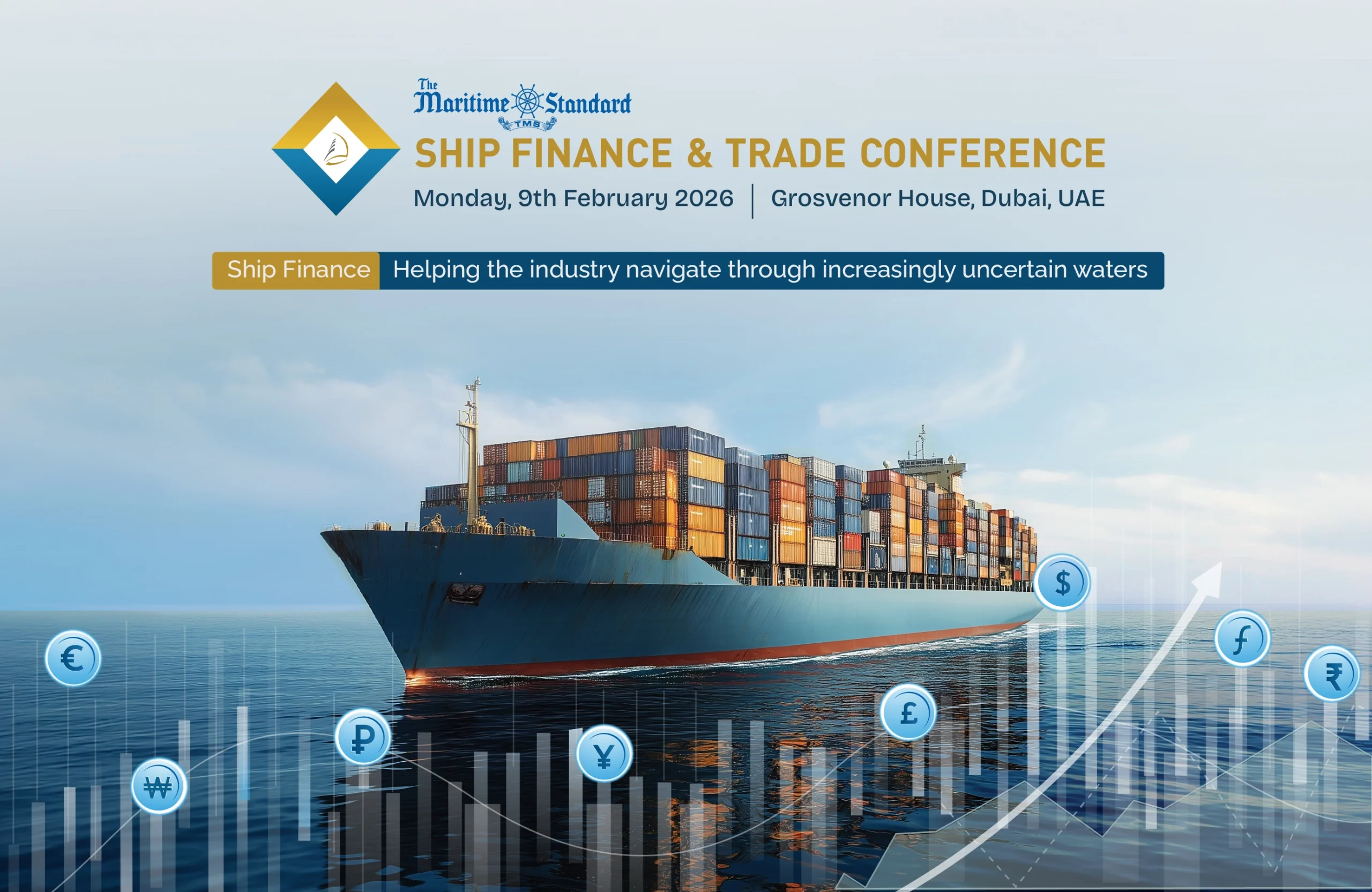
The Maritime Standard has announced the full programme for the eighth edition of the Ship Finance and Trade Conference (SFTC), which will take place on 9 February 2026 at Grosvenor House, Dubai. The conference will be held under the theme Ship Finance: helping the industry navigate through increasingly uncertain waters and will address the financial and strategic issues shaping the future of global shipping and trade.
The programme has been designed to reflect the current challenges facing the maritime industry, including economic volatility, geopolitical disruption, regulatory uncertainty, and the growing pressure to finance the green transition. SFTC 2026 will feature two focused sessions that bring together shipowners, financiers, investors, banks, alternative lenders, policymakers, and industry advisers for in-depth discussion and practical analysis.
The opening session, Financial Strategies in a Volatile World, will examine how shifting market conditions and regulatory developments are influencing ship finance. The discussion will explore emerging global trends in ship finance and assess the impact of trade wars, tariffs, and sanctions on financial services. Particular attention will be given to regulatory uncertainty, including the implications of the International Maritime Organization’s pause on net-zero measures, and how this is affecting investment planning and financing structures.

The session will also consider whether mergers and acquisitions activity is likely to increase, the outlook for conventional bank lending to shipping, and the growing role of alternative lenders. Speakers will examine the challenges of financing newbuildings during periods of geopolitical and regulatory disruption, alongside regional developments in key markets such as Greece and China. Risk management will be a central theme, with discussion on mitigating financial and geopolitical risk, the role of classification in supporting investment decisions, and the increasing relevance of Shariah-compliant financing within the maritime sector.
The second session, Developing Financial Tools to Sustain Support for the Green Transition, will focus on the financial mechanisms required to support decarbonisation and sustainable growth in shipping. The session will address how financial services can support long-term investment in alternative fuel newbuildings despite regulatory uncertainty, as well as the financing of the next phase of environmental retrofits across existing fleets.
Discussions will also examine concerns around greenwashing and how regulatory scrutiny in this area is expected to evolve. Emerging carbon trade markets and strategies for their further development will be reviewed, alongside an assessment of the Poseidon Principles and the extent to which shipping is aligning with them. The session will also consider how financiers are assessing the risks associated with the green transition, the role of maritime decarbonisation funds, and the importance of investing in human skills to support green shipping. The contribution of digitalisation and artificial intelligence in enabling more efficient and sustainable maritime operations will form part of the discussion.
The Ship Finance and Trade Conference has established itself as a key forum for informed discussion on maritime finance, and the 2026 programme reflects the complex environment in which the industry is operating. Further speaker announcements will be made in due course.
Registration is now open and subject to capacity. Further details and registration are available at https://tms-shipfinanceandtrade.com/delegate-registration. Updates will be shared under #TMSSFTC2026.