ZOOM ON THE INTERNATIONAL BLUE FLAG LABEL: A COMMITMENT TO MORE SUSTAINABLE BEACHES, MARINAS AND TOURISM BOATS
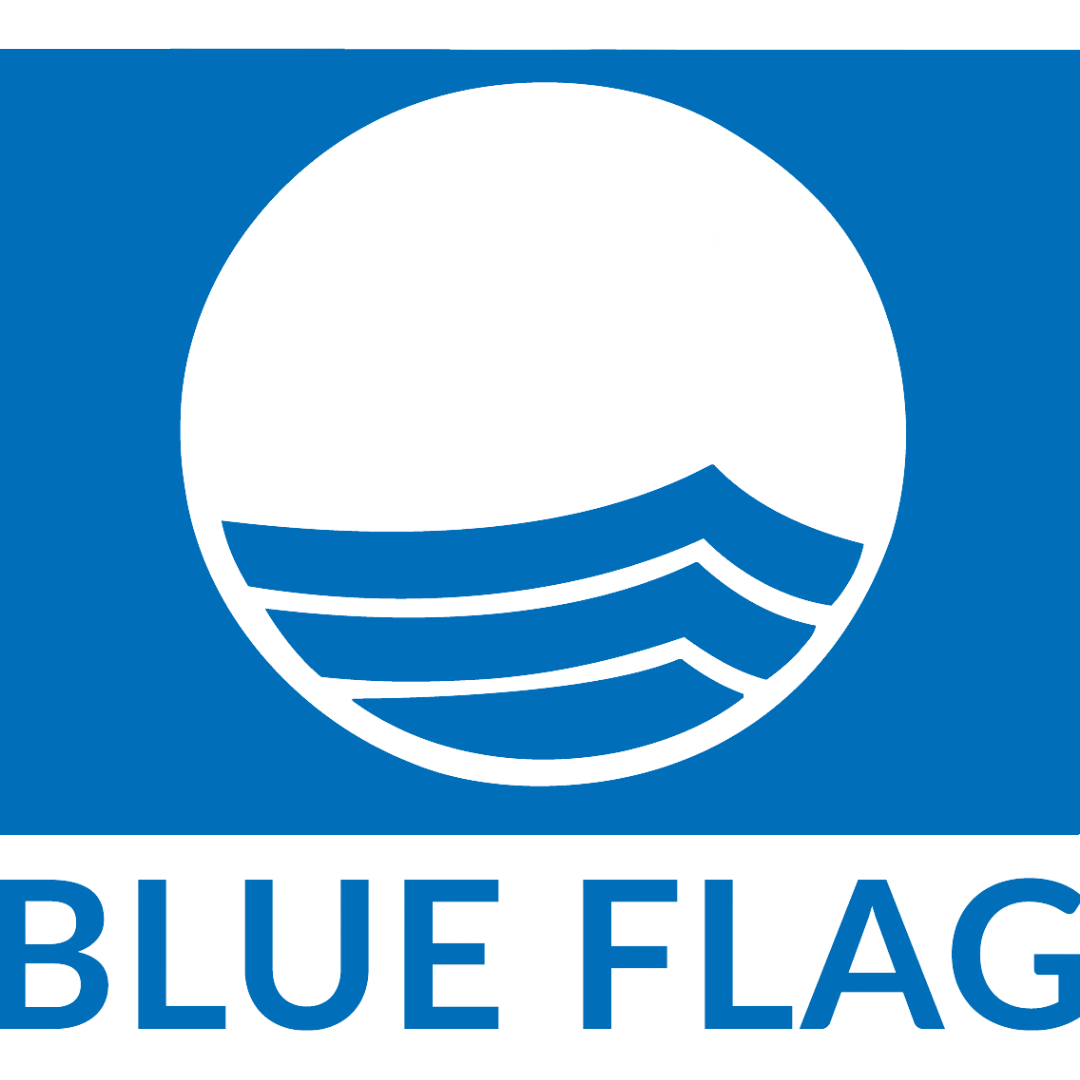 Recognised by its iconic blue flag, Blue Flag is an international environmental label awarded to beaches, marinas and tourism boats that meet a comprehensive set of requirements relating to environmental management, environmental education, bathing water quality, safety and accessibility.
Operating in more than 50 countries across five continents, this voluntary programme has become an internationally recognised framework for supporting coastal and marine tourism stakeholders in adopting more responsible and sustainable practices.
But what does the Blue Flag really stand for? How can a site obtain this label, and why is it important for the protection of coastal and marine environments? Let’s take a closer look at a programme that puts the environment at the heart of tourism.
What is Blue Flag?
Blue Flag is an international environmental sustainability programme for beaches, marinas and tourism boats. It is operated by the Foundation for Environmental Education (FEE) through a network of National Operators in participating countries.

Its main objective is to encourage responsible management of coastal and marine areas while raising awareness among visitors, tourism professionals and local communities about the importance of protecting their environment.
The award of the Blue Flag is based on compliance with a comprehensive set of environmental, educational, health, safety and accessibility criteria. The applicable requirements vary depending on whether the applicant is a beach, marina or tourism boat.
Beyond the flag itself, Blue Flag represents a commitment to more sustainable tourism and the protection of natural resources and ecosystems.
From a French initiative to an international programme
The story of Blue Flag began in France in 1985 with an initiative designed to raise public awareness of marine pollution and its cross-border nature.
As part of this initiative, 1,000 students wrote messages that were placed in bottles and released into the Atlantic Ocean. This symbolic action illustrated how ocean currents can carry pollution from one country to another, highlighting the fact that protecting the oceans is a shared responsibility.
The initiative used a blue flag featuring a white circle and three waves, which laid the foundations for the programme’s visual identity.
In 1987, during the European Year of the Environment, Blue Flag expanded across Europe. The first sites were awarded in ten European countries, based on criteria covering bathing water quality, environmental management, environmental education and safety.
A new chapter began in 2001, when the programme expanded beyond Europe and became an international initiative. Its network gradually grew across Africa, the Americas, Asia and the Pacific.
In 2016, the programme further expanded its scope to include tourism boats, with criteria adapted to the specific characteristics of these activities.
Since its creation, Blue Flag criteria and procedures have been regularly reviewed and developed to address emerging environmental challenges, local needs and the requirements of sustainable coastal and marine management.
Today, the programme operates in more than 50 countries across five continents, with over 5,000 participating beaches, marinas and tourism boats.
What are the criteria for obtaining the Blue Flag?
Receiving the Blue Flag requires compliance with a set of defined criteria. The applicable requirements depend on the type of site or tourism activity concerned. They mainly cover the following areas.
1. Environmental education and awareness
Environmental education is one of the central pillars of the programme. Applicant sites must provide or support environmental education activities suited to their local environment and target audiences.
These activities may focus on biodiversity, local ecosystems, marine pollution, natural resource conservation and responsible behaviour that helps protect the environment.
2. Visitor information
Visitors must have access to clear and accessible information about the site, available facilities, bathing water quality where applicable, local ecosystems, environmentally sensitive areas, safety measures and appropriate codes of conduct.
The aim is to help visitors better understand their surroundings and enjoy the facilities while contributing to environmental protection.
3. Environmental management
Beaches, marinas and tourism boats must comply with environmental management requirements appropriate to their activities.
These may include waste collection and recycling, water and energy consumption, pollution prevention, wastewater management, biodiversity protection and the preservation of sensitive natural areas.
4. Water quality
For beaches, bathing water quality is a fundamental requirement. It must meet defined standards relating to water sampling, analysis and monitoring.
Information about bathing water quality must also be made available to visitors.
For marinas and tourism boats, the requirements focus particularly on water protection, pollution prevention, wastewater management and the control of discharges.
5. Safety and services
Visitor safety is another key priority. Depending on the category concerned, requirements may include lifesaving and rescue equipment, first-aid facilities, fire-fighting equipment, emergency procedures, safety information and appropriate sanitary facilities.
The management of recreational activities and the services provided to visitors are also taken into consideration.
6. Accessibility
The programme also includes accessibility requirements, particularly for people with disabilities, according to the characteristics of the site and the applicable criteria.
These may relate to access points, facilities, equipment and the availability of information about accessible services and areas.
How does a site obtain the Blue Flag?
Obtaining the Blue Flag involves an evaluation process conducted at both national and international levels.
The process generally begins with an application to the Blue Flag National Operator in the country concerned. Beach and marina managers, as well as those responsible for tourism boats, must demonstrate that they meet the applicable criteria and provide the information and documentation required for assessment.
Applications are reviewed through national and international procedures. Sites that meet the relevant requirements may be awarded the right to display the Blue Flag during the designated award period.
However, receiving the label does not represent a permanent guarantee. Site managers and those responsible for tourism boats remain fully responsible for maintaining compliance throughout the award period.
Monitoring and control visits are conducted or coordinated by National Operators. Blue Flag International may also carry out international control visits.
Where applicable criteria are not met, corrective measures may be required. Depending on the circumstances, the Blue Flag may be temporarily suspended or permanently withdrawn.
Who manages the Blue Flag programme?
Blue Flag operates through a multi-level structure combining international coordination, national implementation and local responsibility.
The Foundation for Environmental Education (FEE) is the international organisation responsible for the programme. Through Blue Flag International at its headquarters, FEE coordinates the global network, develops and maintains the international criteria, supports National Operators and oversees international evaluation and monitoring procedures.
National Operators are generally FEE member organisations authorised to implement the programme in their respective countries. They serve as the main points of contact for applicants and participating sites. Their responsibilities include providing guidance on applications, reviewing submissions, coordinating national evaluations and monitoring compliance with the criteria.
Local authorities and site managers play an essential role in implementing the requirements. The authorities responsible for beaches, marina managers and those responsible for tourism boats must put the necessary measures in place and maintain compliance throughout the award period.
This structure allows Blue Flag to apply common international requirements while taking into account the environmental, regulatory and operational realities of each country.
Blue Flag in Africa: Morocco and South Africa leading the way
In Africa, according to the figures presented, the Blue Flag programme is currently represented in two countries: Morocco and South Africa.
Morocco has 34 awarded beaches and 4 marinas, while South Africa has 51 awarded beaches, 5 marinas and 7 tourism boats.
These two countries illustrate the development of the programme on the African continent and the growing importance of integrating environmental requirements into coastal destination management and marine tourism activities.
For other African countries, Blue Flag offers an opportunity to strengthen the sustainable management of beaches, marinas and marine tourism activities while recognising efforts to protect the environment.
Why is Blue Flag important?
The importance of Blue Flag goes beyond the visual recognition of a beach or marina. It provides a structured framework that helps site managers and tourism stakeholders improve their practices and strengthen their environmental commitments.
For tourism destinations, it offers a way to highlight their efforts in water quality, safety, cleanliness, accessibility and ecosystem protection.
For visitors, it indicates that a site has demonstrated compliance with a defined set of environmental and service requirements applicable to its category.
For local authorities and professionals in the maritime and tourism sectors, it encourages better activity management, more responsible resource use and greater environmental awareness among users.
The programme also promotes the exchange of experiences and good practices between countries, public authorities, site managers and organisations committed to environmental protection.
Blue Flag: a commitment that must be renewed
Displaying the Blue Flag does not mean that environmental protection efforts are complete. On the contrary, the label is based on a continuous commitment.
Every awarded site or tourism boat must maintain compliance with the applicable criteria throughout the award period and cooperate with the programme’s monitoring and control activities.
Practices must therefore be regularly assessed and improved to meet environmental, educational, health, safety and accessibility requirements.
Blue Flag is much more than a flag: it is an international framework encouraging coastal and marine tourism stakeholders to balance human activities, tourism attractiveness and ecosystem protection.
How can you participate in the Blue Flag programme?
Local authorities, beach and marina managers, as well as those responsible for tourism boats, can contact their country’s Blue Flag National Operator to learn about the applicable criteria and application procedures.
In countries where the programme is not yet represented, interested organisations can visit the Foundation for Environmental Education (FEE) website to learn more about becoming a member and contributing to the programme’s development in their country.
Find out more: https://www.fee.global/ and https://www.fee.global/become-a-member
Ultimately, Blue Flag is a collective commitment: managing our coastal and marine environments responsibly today to protect tomorrow’s natural resources and ecosystems.