MARITIME POLLUTION – WIOPOLREX: Develop a common roadmap to enhance collective coordinated actions at sea
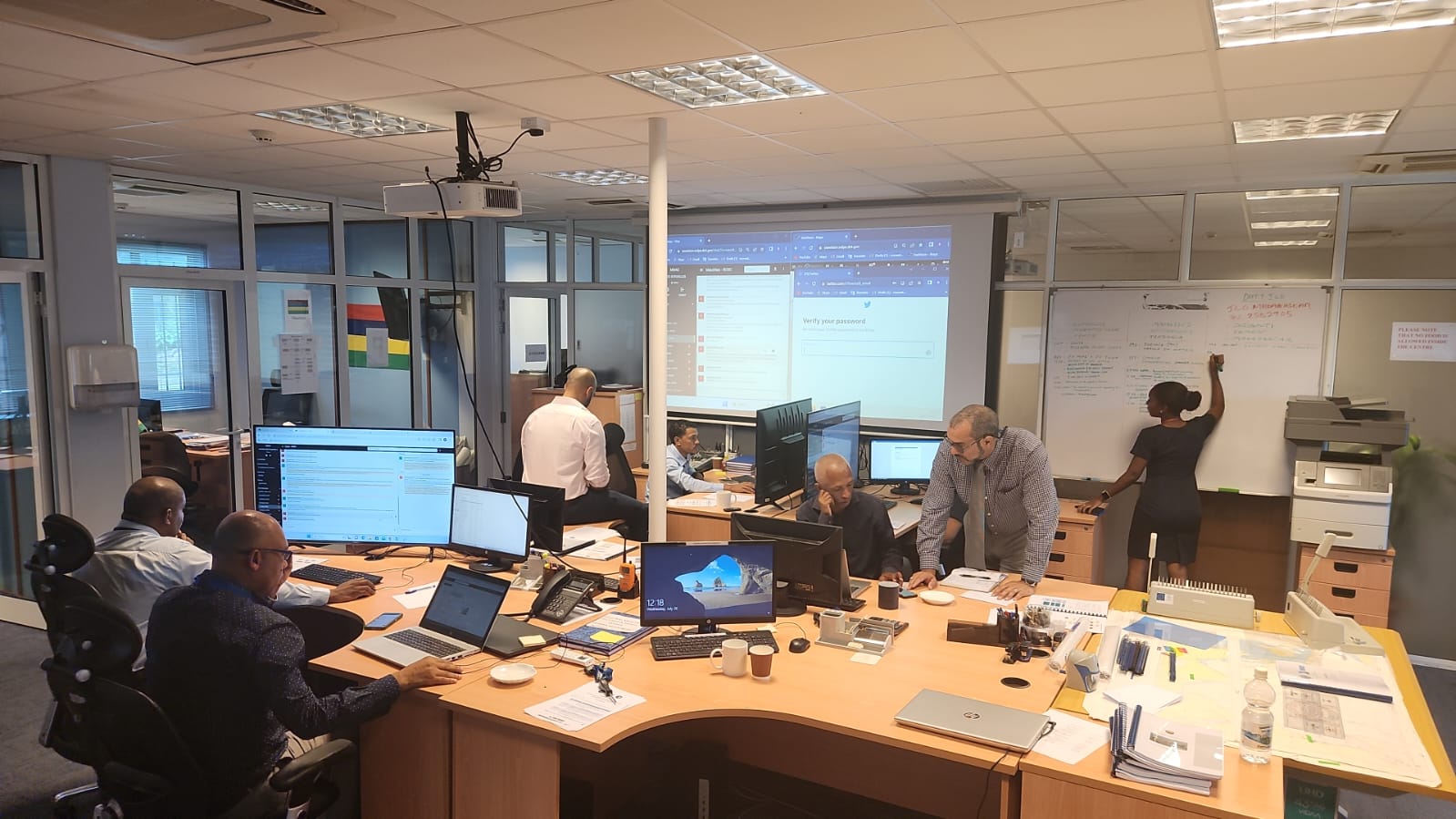
Is one of the main objectives of the Western Indian Ocean Pollution Regional Exercise (WIOPOLREX), taking place in Seychelles from 25 -28 July 2023. This exercise aims at strengthening national preparedness and response systems for effective regional cooperation during major maritime pollution incidents. The kick off Ceremony was held on Tuesday 25th of July 2023 in Seychelles in the presence of the Principal Secretary from the Ministry of Agriculture, Climate Change and Environment of the Republic of Seychelles, the Head of Cooperation of the European Union (EU) Delegation in Mauritius, the Chargé d’Affaires of the United States Embassy for Mauritius and Seychelles and the Director of the the Indian Ocean Commission (IOC).
Organised by the Regional Coordination Operations Centre (RCOC) and the Regional Maritime Information Fusion Centre (RMIFC) – two executive bodies of the Maritime Security Architecture for the Western Indian Ocean – the regional Table Top exercise (TTX) brought together the MASE¹ signatory States as well as Maldives, Mozambique, South Africa, Tanzania, Yemen, India, United Kingdom and United States.
Key international partners actively involved in the maritime domain are also participating including the International Maritime Organisation (IMO), the Nairobi Convention, the United Nations on Drugs and Crimes (UNODC), and the EU Naval Forces among others.

The regional simulation exercise is part of the overall action plan of the two regional centres to examine their capacity to coordinate and response to maritime pollution incidents, together with States in the region and further strengthen the regional mechanism on information sharing and joint operations at sea, which is implemented by the IOC through the EU-funded Maritime Security Programme (MASE²).
Improving coordination, a prerequisite for effective collective response
The large-scale mobilisation demonstrates the willingness of States and partners to develop a collective approach to maritime pollution incidents in the region to improve coordination and interoperability.
As pointed out by the Director of IOC, “it is important to have all partners like the Nairobi Convention, SAMSA, IMO, alongside the national and regional centres to strengthen their ability to work together to support regional coordination in the event of accidental marine pollution incidents and to avoid duplication.” said Dev Phokeer.
In the same spirit, the Chargé d’Affaires of the US Embassy stressed on the importance of structuring and reinforcing the mechanism of maritime pollution responses, “there is a growing recognition among stakeholders on the critical role of regional cooperation frameworks, for nations to respond and work together more effectively on joint operations at sea to mitigate the effects of such incidents” noted Jim Donegan

Addressing capacity gaps
Lessons learnt on past incidents in the region namely the grounding of the MV Wakashio off the coast of Mauritius as well as other grounding and/or drifting situations occurred in neighbouring countries, clearly indicate that a country on its own, cannot address all levels of maritime pollution incidents.
The exercise is an opportunity for participating States to examine their maritime pollution preparedness and strategy, as well as their ability to share information and implement responses as per their respective National Oil Spill Contingency plan.
According to the Head of Cooperation of the EU Delegation, “ it is important to ensure an effective articulation and synergy between the national oil spill plan and the regional contingency plan with clearly defined and established procedures. Otherwise, there would be delays for both national commitment and buy-in of policy makers as well as coordination at regional level for an effective regional response capability ” emphasised Milko Van Gool.
In this context, technical support from international partners whether in terms of information exchange to improve maritime domain awareness or sharing of best practices, is key to improve capability both at national and regional levels. The Seychelles, for instance, benefited recently “a technical support from the Nairobi Convention through the SAPPHIRE project to review its National Oil Spill Contingency Plan. By 2024, Seychelles hopes to have a new and improved plan in operation, ready to face maritime pollution challenges” announced Denis Matatiken, Principal Secretary from the Ministry of Agriculture, Climate Change and Environment of the the Republic of Seychelles.
The development of the regional mechanism for responding to maritime pollution incidents is part of a wider effort to foster ownership of maritime security issues by the States in the region.
The simulation exercise is therefore a first step in complying with international conventions, in particular the Nairobi Convention and in adapting to growing challenges. A field exercise (FTX) shall be organised to confirm the recommendations resulting from the current simulation exercise, before proceeding to the validation of the revised regional contingency plan by the concerned countries.
1 Signed in 2018 by Comores, Djibouti, France, Kenya, Madagascar, Mauritius and Seychelles
2 Regional Maritime Security programme: funded by the European Union to the tune of €42 million since 2012,
the MASE programme is implemented by IGAD, COMESA, EAC and IOC. The IOC is responsible for establishing a
maritime security architecture based on information exchange and coordination of joint operations at sea