Charting New Horizons for Women in Maritime Law Enforcement Across East Africa
Across classrooms, harbours and coastal communities in East Africa, a shift is taking place. For generations, women have supported the maritime sector behind the scenes, ensuring the continuity of seafaring families, coastal economies and keeping maritime traditions alive. Today, women in uniform — from coast guards and police to customs and fisheries officers — are stepping into the spotlight, inspiring a new generation of maritime law enforcement professionals.
Funded by the Government of Japan, the United Nations Office on Drugs and Crime (UNODC) organized a series of community outreach and engagement activities in Comoros, Kenya, Madagascar, Mauritius, Tanzania and the Seychelles. Held throughout September 2025, these events aimed to raise awareness among young women about career paths within maritime law enforcement and address the social and institutional barriers that continue to limit their participation.
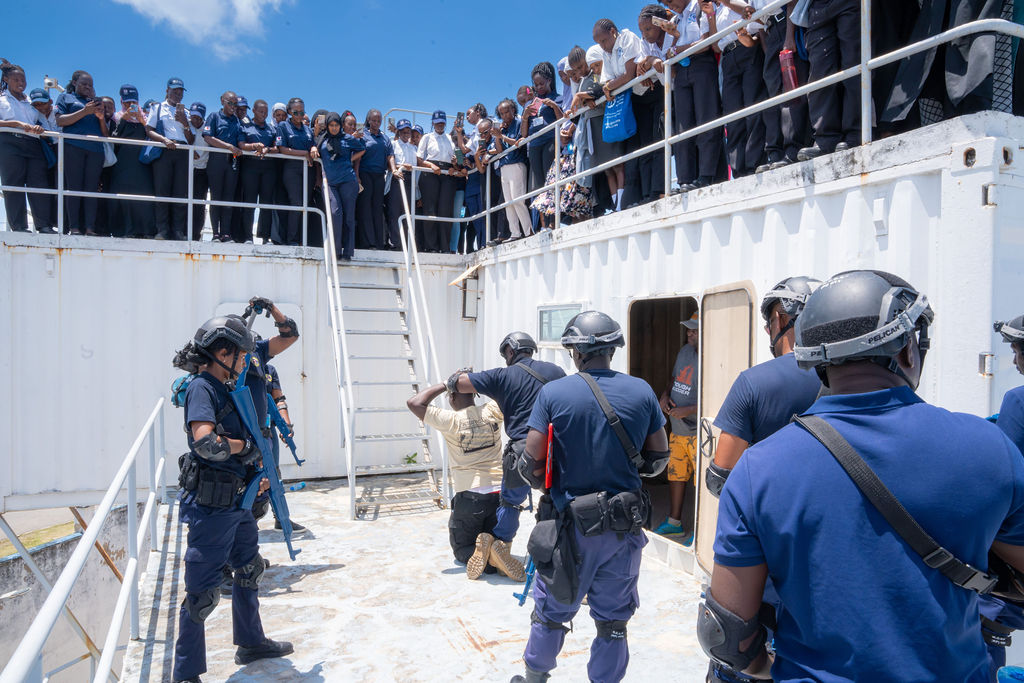
Along the coast of Dar es Salaam, Tanzania, female officers from the Marine Police showcased a live offshore rescue demonstration. Students crowded under a large tent, cheering, saluting and sharing with their network on social media as officers demonstrated rescues and survival techniques. By the end of the day, 18 students had expressed interest in joining maritime service. “I didn’t know women could do this,” said one girl. “Now, I want to to help those who can’t swim,” after watching the water rescue demonstration.”
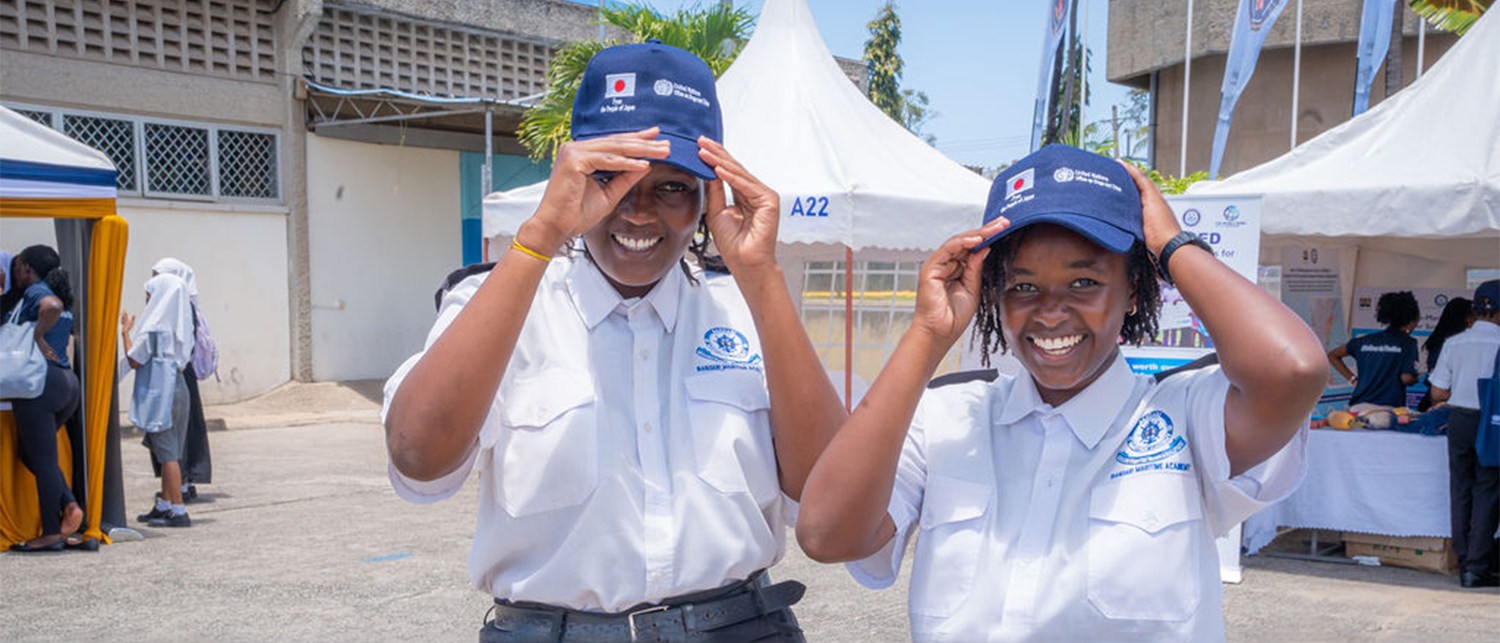
At Kenya’s Bandari Maritime Academy, students eagerly wandered from tent to tent, exploring diving gear, life-saving kits, and tools presented by female officers of the Kenya Coast Guard and Fisheries Service. For most, this was the first time they had met women who navigate, dive and defend their nation’s waters. “It was great,” one student smiled, “now we’re thinking about a maritime career.”

In Mauritius, the Odysseo Aquarium turned into a living classroom, where students and parents explored interactive exhibits, from forensics sampling to sea rescue displays – each led by women in uniform. Young girls listened to female officers speak about their career journeys with the police, customs, and fisheries departments, allowing parents to envision a future of opportunity ahead and changing their perspective on the role of women in maritime law enforcement.
In Madagascar, students toured patrol boats and the Maritime Operations Centre, guided by senior female officers who shared their journeys of service. One teacher highlighted the importance of such sessions since many students did not know about these career options, and students described the experience as ‘fantastic’, inspired by seeing a refreshing minority of women leading confidently at sea.
A similar spark emerged at the University of Seychelles, where female police officers from the K9, forensics, and marine units engaged in open conversations with secondary school and law students. They discussed opportunities for women in the maritime sector, shifting the perspective of students around what was perceived as a male-dominated field; continuing a dialogue on maritime security initiated earlier in the year. Students left eager to apply for internships, while educators agreed to organize follow-up sessions.
In Comoros, where only a small number of women currently serve in the Coast Guard, the initiative highlighted the importance of sustained dialogue and investment. It underscored that inclusion in maritime sectors requires collective effort – from institutions, communities and youth alike.
As Ms. Yoshino Shibata of the Embassy of Japan in Tanzania explained, “tackling maritime challenges like drug trafficking and illegal fishing requires inclusive law enforcement, where women’s participation strengthens the collective response.”
When women are seen, heard and empowered, the entire maritime sector grows stronger, benefiting from their leadership, knowledge and perspectives. Every conversation, mentorship and moment of visibility brings the region closer to a more inclusive maritime future.
Learn more about the UNODC Global Maritime Crime Programme.
Source : UNODC