IMO: Draft workplan agreed on safety rules for battery, wind and nuclear-powered ships
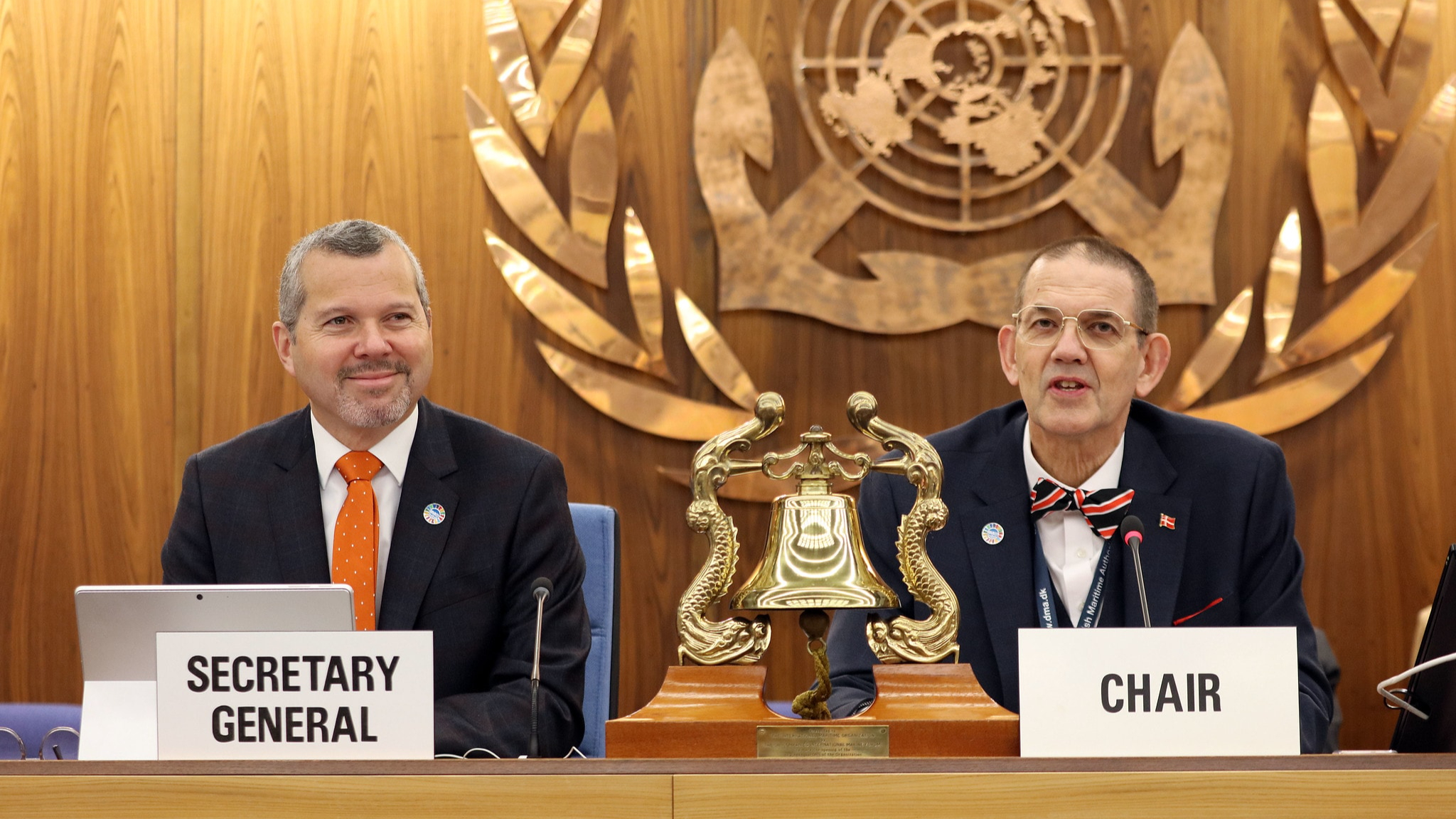
The International Maritime Organization’s Sub-Committee on Ship Design and Construction (SDC) held its 12th session at IMO Headquarters in London from 19 to 23 January and was chaired by Mr. Erik Tvedt (Denmark). Outcomes are summarised below:
KEY OUTCOMES
- Draft workplan agreed to develop a safety framework for selected GHG-reducing technologies
- Actions to reduce underwater radiated noise from ships
- Draft guidelines on remote inspection techniques for ESP surveys agreed
- Draft revised Guidelines for the use of fibre-reinforced plastics (FRP) within ship structures (related to fire safety) agreed
- Read the full meeting summary
Work plan for GHG safety framework
IMO’s Sub-Committee on Ship Design and Construction (SDC) has finalised a workplan to develop a safety regulatory framework for ships using new technologies and alternative fuels to reduce greenhouse gas emissions. The draft workplan will be submitted to the Maritime Safety Committee (MSC 111) for approval in May 2026.
The workplan will involve developing or amending existing safety regulations that are under the purview of the SDC Sub-Committee, related to nuclear power; wind-propulsion and wind-assisted power; and lithium-ion batteries and swappable traction battery containers on ships.

Closing the 12th session of the Sub-Committee, which met from 19 to 23 January in London, IMO Secretary-General Arsenio Dominguez said the completion of the work plan was a “major achievement”.
He added: “This will ensure that safety considerations evolve in parallel with the rapid technological progress driven by the IMO’s Strategy on the Reduction of GHG Emissions from Ships”.
Once the draft workplan is endorsed by the Maritime Safety Committee, IMO will work towards key milestones, including:
- 2028 (MSC 111): Adoption of amendments to SOLAS regulation II-1/41 to allow for batteries to be used as the main source of electrical power and lighting systems.
- 2029 (MSC 116): Approval of interim guidelines for the safety of ships using wind propulsion and wind-assisted power.
- 2030 (MSC 118): Adoption of the revised Nuclear Code and amendments to SOLAS chapter VIII.
The Sub-Committee established the SDC Correspondence Group on GHG Safety to compile and analyse information related to nuclear and wind power, as well as develop draft amendments to SOLAS regulation II-1/41 to allow for batteries to be used as the main source of electrical power and lighting systems.
The Correspondence Group will submit a written report to the next session of the Sub-Committee (SDC 13) in 2027.
Actions to reduce underwater radiated noise from ships
The Sub-Committee further progressed the work of the Organization under the Action Plan for the reduction of underwater radiated (URN) noise from commercial shipping (URN Action Plan), which was approved at MEPC 82 in 2024.
Experience-building phase extended
After analysing and discussing lessons learned to date from the three-year experience-building phase (EBP) initiated in 2024 from implementing the Revised guidelines for the reduction of underwater radiated noise from shipping to address adverse impacts on marine life (Revised URN Guidelines) (MEPC.1/Circ.906/Rev.1), the Sub-Committee agreed to invite the Marine Environment Protection Committee (MEPC 84) to extend the EBP for two more years, with a target completion year in 2028.
Should this two-year extension of the EBP be agreed by MEPC 84, it would allow for an extended window to gain further experience in the application of the Revised URN Guidelines, providing more time to address the remaining gaps, needs and barriers related to the implementation of this IMO instrument.
Draft technical guidance agreed for integrating energy-efficient and low irradiated noise solutions in ship design and retrofitting
The Sub-Committee agreed to the draft technical guidance on co-optimizing energy efficiency and underwater radiated noise at the design and retrofit stage with a view to approval by MEPC 84.
This circular provides supplementary technical guidance on integrating URN reduction with energy efficiency (EE), recognizing the synergies between the two frameworks and drawing on experience gained EPB and the outcomes of URN/EE workshops held in 2023 and 2025.
Study on URN Emissions
The Sub-Committee agreed to the draft terms of reference for an IMO-commissioned study on URN emissions, and requested the IMO Secretariat to assess options to cover the cost of the study. The study will support the development of targets for reducing URN by generating in-water estimates and help in determining an URN baseline for ships, as well as for contemporary and future projections of URN emissions.
Source : IMO