
New amendments to SOLAS Chapter IV on GMDSS radio communications (effective January 01, 2024)

GMDSS (Global Maritime Distress and Safety System) is a worldwide communications system used in the maritime sector to ensure the safety of ships and sailors in the event of an emergency. The system enables ships to communicate quickly and efficiently with the appropriate authorities in the event of distress or danger. Thanks to GMDSS, ships in distress can easily contact rescuers wherever they are.
Recently, the International Maritime Organization (IMO) adopted amendments to Chapter IV of the SOLAS (Safety of Life at Sea) Convention concerning radio communications in GMDSS. These amendments will come into force on January 1, 2024, and aim to harmonize the use of modern communication systems in GMDSS.
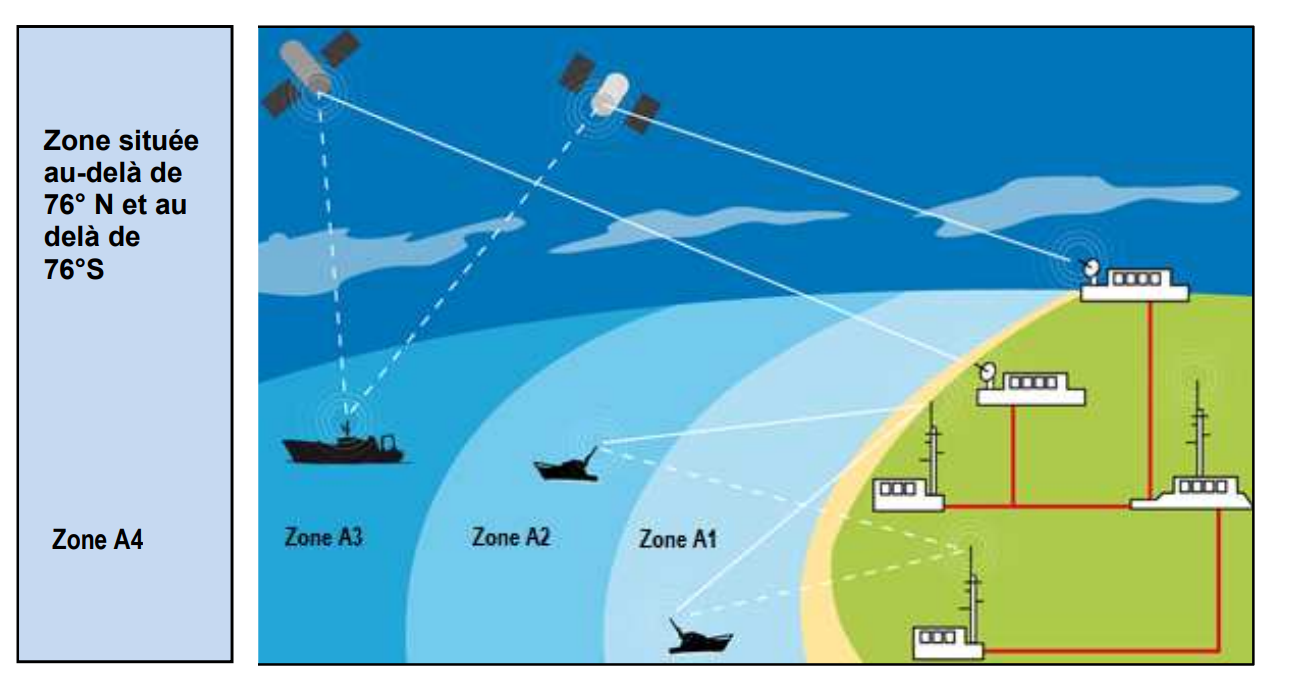
Before discussing the amendments, it is important to understand the different maritime zones defined by the GMDSS. There are four main zones:
- Zone A1: This is an area close to the coast where communication can be provided by VHF (Very High Frequency) shore stations. In this zone, vessels must be equipped with appropriate VHF radio equipment.
- Zone A2: This is an area further from the coast where communication is provided by geostationary satellites. In this zone, vessels must be equipped with VHF radio and appropriate satellite equipment.
- Zone A3: This zone is even further from the coast, where communication is also provided by geostationary satellites. In this zone, vessels must be equipped with appropriate satellite equipment.
- Zone A4: This is an area outside zones A1, A2 and A3, beyond 76°N and 76°S.

The amendments adopted by IMO include several significant changes to SOLAS Chapter IV. Here are the highlights of these changes:
- Replacement of references to Inmarsat: References to Inmarsat, a provider of satellite communication services, have been replaced by the term “Recognized Mobile Satellite Service” (RMSS). In addition to the maritime mobile satellite services provided by Inmarsat, IMO has also recognized the maritime mobile satellite services provided by IRIDIUM SATELLITE LLC.
- A3 zone definition change: The definition of the A3 zone has been modified to include areas covered by a recognized mobile satellite service (RMSS) supported by the ship earth station (SES) on board, in which continuous alerting is available. For a ship certified to operate in zone A3, the Cargo Ship Radio Safety Certificate must indicate the recognized mobile satellite service in brackets (INMARSAT / IRIDIUM).
- Removal of the requirement for direct-printing telegraphy (NBDP): The transmission and reception of distress and safety communications using direct-printing telegraphy (NBDP) is no longer a GMDSS requirement, and is therefore no longer mandatory on board ships.
- Inclusion of SART/AIS-SART and two-way VHF radiotelephone requirements: Requirements for SART/AIS-SART and two-way VHF radiotelephones are now part of SOLAS Chapter IV, which deals with life-saving appliances and arrangements at sea.
- The MF/HF radio installation is no longer considered primary equipment for sea area A3, but remains primary equipment for sea area A4.
- If a VHF EPIRB is installed on a vessel operating solely in sea area A1, it must be replaced by a satellite EPIRB.
- After January 1, 2024, existing vessels operating in sea area 3 which have only MF/HF equipment and no SES, will be required to install at least one SES.
The amendments to SOLAS Chapter IV on radio communications in the GMDSS are intended to enable the use of modern communication systems and improve the safety of ships and seafarers in the event of an emergency. It is essential that shipowners, operators and masters familiarize themselves with these changes and ensure compliance with the new requirements. These changes will help enhance maritime safety and facilitate communications in case of need. For more details, please consult COMSAR.1-Circ.32-Rev.2.
 Author: Mohamed CISSOUMA,
Expert naval engineer,
Responsible for certification of navigation equipment and onboard systems
Capitain
President of ELIT