Minister Ramful reaffirms Mauritius’ commitment to regional maritime security cooperation
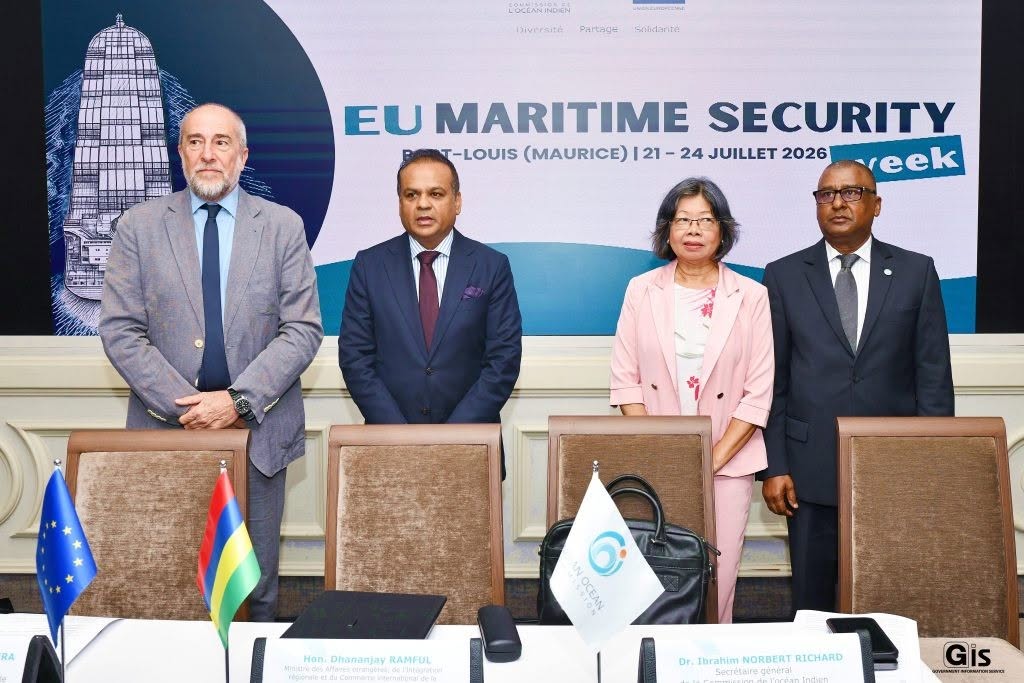
Mauritius remains firmly committed to strengthening regional maritime cooperation and enhancing collective capacity to address emerging maritime security threats in the Western Indian Ocean. The Minister of Foreign Affairs, Regional Integration and International Trade, Mr Dhananjay Ramful, made this statement today in Port-Louis at the opening of the 3rd EU Regional Maritime Security Week, which coincided with the third Safe Seas Africa Steering Committee.
The Chargé d’affaires, European Union (EU) delegation to Mauritius, Mr Jose Maria Troncoso- Perera; the Secretary General of the Indian Ocean Commission (IOC), Dr Ibrahim Norbert Richard; the Secretary for Home Affairs, Prime Minister’s Office, Mrs Kan Oye Fong Weng-Poorun and other personalities were present.
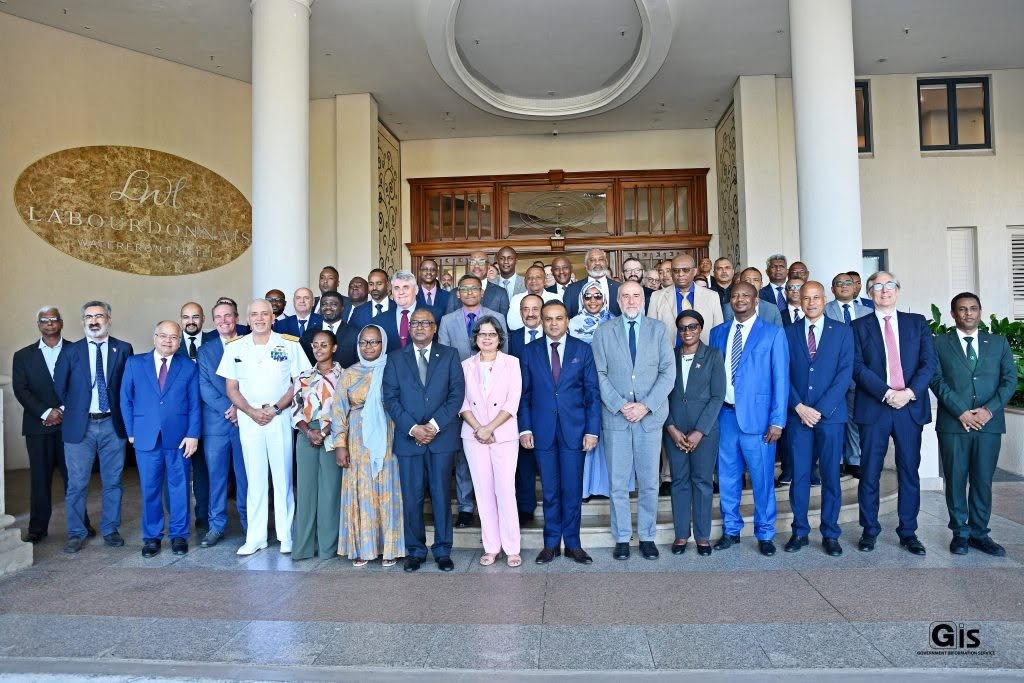
Organised by the EU in partnership with the IOC, the EU Maritime Security Week, being held from 21 to 24 July, is a high-level regional forum aimed at reinforcing cooperation to promote a safer, more secure and resilient maritime domain. The event brought together representatives of the EU, the IOC, the International Maritime Organisation, INTERPOL, the United Nations Office on Drugs and Crime, as well as heads of delegations and regional maritime security stakeholders.

In his address, Minister Ramful highlighted the importance of the Maritime Security Week as a unique platform bringing together the third Safe Seas Africa Steering Committee, the fifth Port Security Programme Steering Committee, the 13th Regional Maritime Security Architecture Signatory States Steering Committee, and the third Plenary Session Contact Group on Illicit Maritime Activities
Thee Minister expressed the appreciation of the Government of Mauritius to the IOC, the EU and regional and international partners for their continued commitment to enhancing maritime safety, maritime security and regional cooperation across the Western Indian Ocean. He highlighted that the support provided through the Committees has significantly strengthened the operational capacities of participating Member States in addressing increasingly complex maritime security challenges.
Speaking of Mauritius’ Exclusive Economic Zone of more than 2.2 million square kilometres, Dr Ramful indicated that it places the ocean at the heart of the country’s economy, security and future. He pointed to growing maritime challenges, including transnational organised crime, illicit trafficking, illegal, unreported and unregulated fishing, marine pollution and cyber threats, stressing the need for stronger regional cooperation, coordinated action and enhanced information sharing.
The Minister also referred to recent developments in the Red Sea and the Strait of Hormuz, noting that they underscore the vulnerability of global shipping routes and their impact on transport costs and the economies of maritime nations. He emphasised that no country can address maritime threats alone and reaffirmed Mauritius’ commitment to the Regional Maritime Security Architecture and its operational mechanisms, including the Regional Coordination Operations Centre in Seychelles and the Regional Maritime Information Fusion Centre in Madagascar.
Speaking on the next phase of regional maritime cooperation, Minister Ramful called for increased investment in maritime domain awareness, digital transformation, cyber resilience, artificial intelligence, data analytics and integrated maritime information systems to strengthen operational effectiveness and preparedness against emerging threats. He also underscored the importance of reinforcing legal and governance frameworks, harmonising legislation and promoting judicial cooperation to combat transnational maritime crime.
The Minister concluded by stating that the deliberations and outcomes of the Maritime Security Week would further strengthen regional cooperation and advance the shared vision of a safer, more secure, resilient and prosperous Western Indian Ocean.
Mr Troncoso-Perera reaffirmed EU’s commitment to support regional maritime security and sustainable maritime governance. He noted that the progress achieved under the regional maritime security architecture stems from close collaboration among partner countries, adding that enhanced data sharing is essential to strengthening maritime surveillance and safeguarding the region’s blue economy.
Dr Richard, for his part, highlighted the importance of sustained investment in maritime security to safeguard regional stability, promote sustainable ocean development and protect the marine environment. He underscored the need for enhanced knowledge-sharing, maritime surveillance and operational cooperation, expressing confidence that stronger regional collaboration would improve information exchange, reinforce operational capacities, combat transnational threats and strengthen the resilience of coastal States to climate and environmental risks.
Source : GIS Mauritius