
Sandfish Project advances marine restoration and sustainable aquaculture in Mauritius
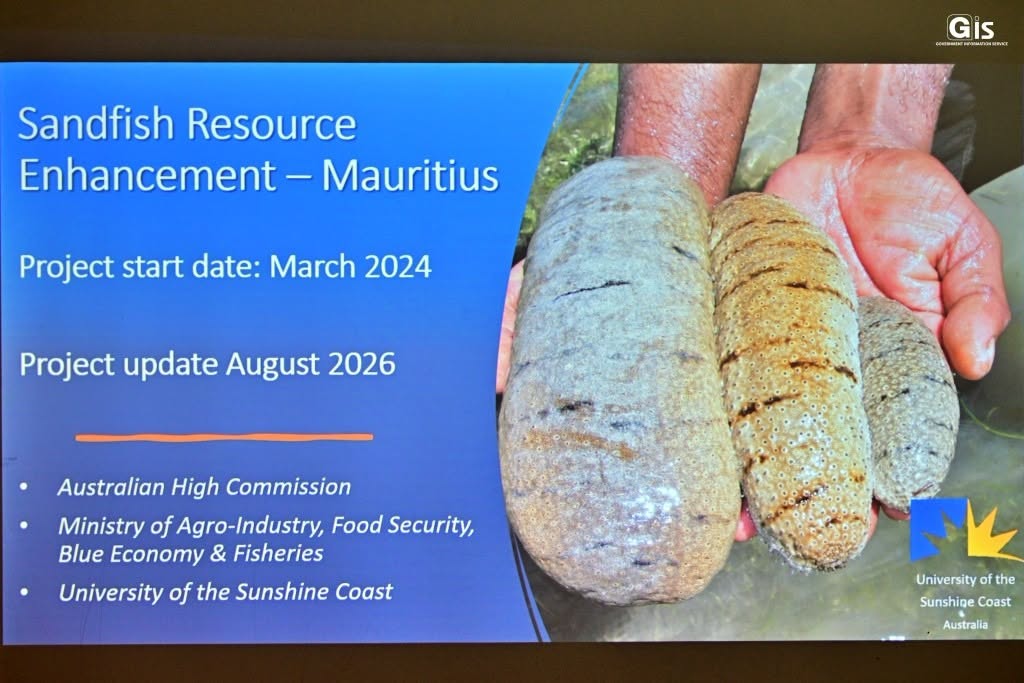
“Government is pursuing efforts to restore marine resources and promote sustainable aquaculture through the Sandfish Project, which combines scientific research, international expertise and local capacity building to replenish sandfish stocks in Mauritian waters while exploring the species’ longer-term commercial potential.”
The Minister of Agro-Industry, Food Security, Blue Economy and Fisheries, Dr Arvin Boolell, made this statement, yesterday, during a roundtable meeting on the Sandfish Project at the Albion Fisheries Research Centre (AFRC).
The Junior Minister of the Ministry of Agro-Industry, Food Security, Blue Economy and Fisheries, Mr Gilles Fabrice David; the Australian High Commissioner to Mauritius, Ms Kate Chamley; researchers from the University of Sunshine Coast, Australia, Prof. Paul Southgate and Dr Cathy Hair; and officers of the AFRC were also present.

Speaking about the project, Minister Boolell highlighted that applied research undertaken at the AFRC was geared towards generating tangible benefits for the population and supporting the sustainable development of Mauritius’ marine resources. He underlined that a key objective of the Sandfish Project was to replenish the lagoon, which had witnessed a decline in marine life.
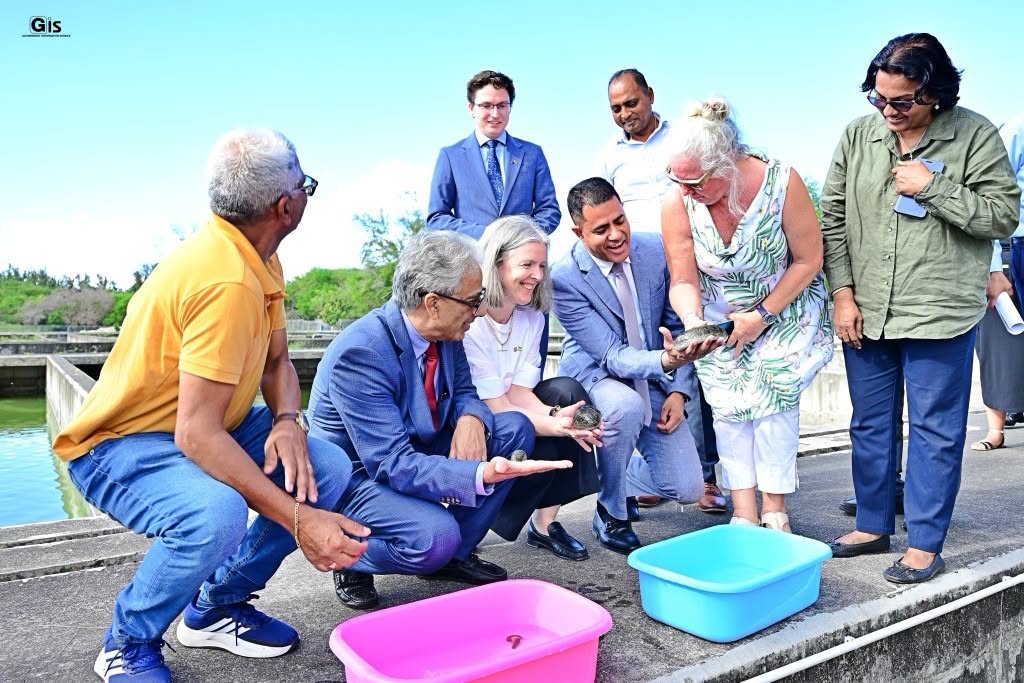
“Around 800 juvenile sandfish,” he indicated, “are expected to be introduced into the marine environment as part of the ongoing initiative.” Dr Boolell also underscored the ecological importance of sea cucumbers, which contribute to maintaining a healthy marine environment by cleaning and improving the seabed. He further pointed out that commercialisation would require adequate preparation and would have to be developed progressively.
For her part, High Commissioner Chamley stated that the project demonstrated the practical partnership between Australia and Mauritius in the Blue Economy sector. She observed that collaboration between Australian experts and Mauritian researchers had facilitated technology transfer, strengthened local capacity and enhanced aquaculture research capabilities.
The Australian High Commissioner welcomed the progress achieved, including successful hatchery production and the increasing leadership being assumed by local teams in the hatchery process. She indicated that, beyond restoring sandfish stocks, the project could lay the foundation for a sustainable commercial aquaculture industry capable of contributing to economic growth, employment and food security.
As for Prof. Southgate, he affirmed that juvenile production had now been successfully achieved at the Albion facility. He explained that the next stage would require further data on growth rates, survival, production yields and economics to assess the viability of commercial production.
He underscored the positive environmental role of sandfish, noting that they process material in the seabed and help oxygenate the sediment, thereby contributing to a healthier habitat for other marine organisms. He moreover expressed optimism that sandfish could eventually underpin a sustainable aquaculture sector in Mauritius.
The roundtable was followed by a visit to the ponds at the AFRC to take stock of progress achieved under the project.
Source : GIS Mauritius